Designing the world of A Few Good Men
Set and Costume Designer Simone Romaniuk crafts a space shaped by formality, structure, and the stark hierarchies of military life. Drawing on the geometry of the Pentagon, the gravity of a war memorial, and the precision of uniformed order, she reveals how set, sound, and light combine to place us in 1986 and sharpen the play’s moral and emotional stakes.
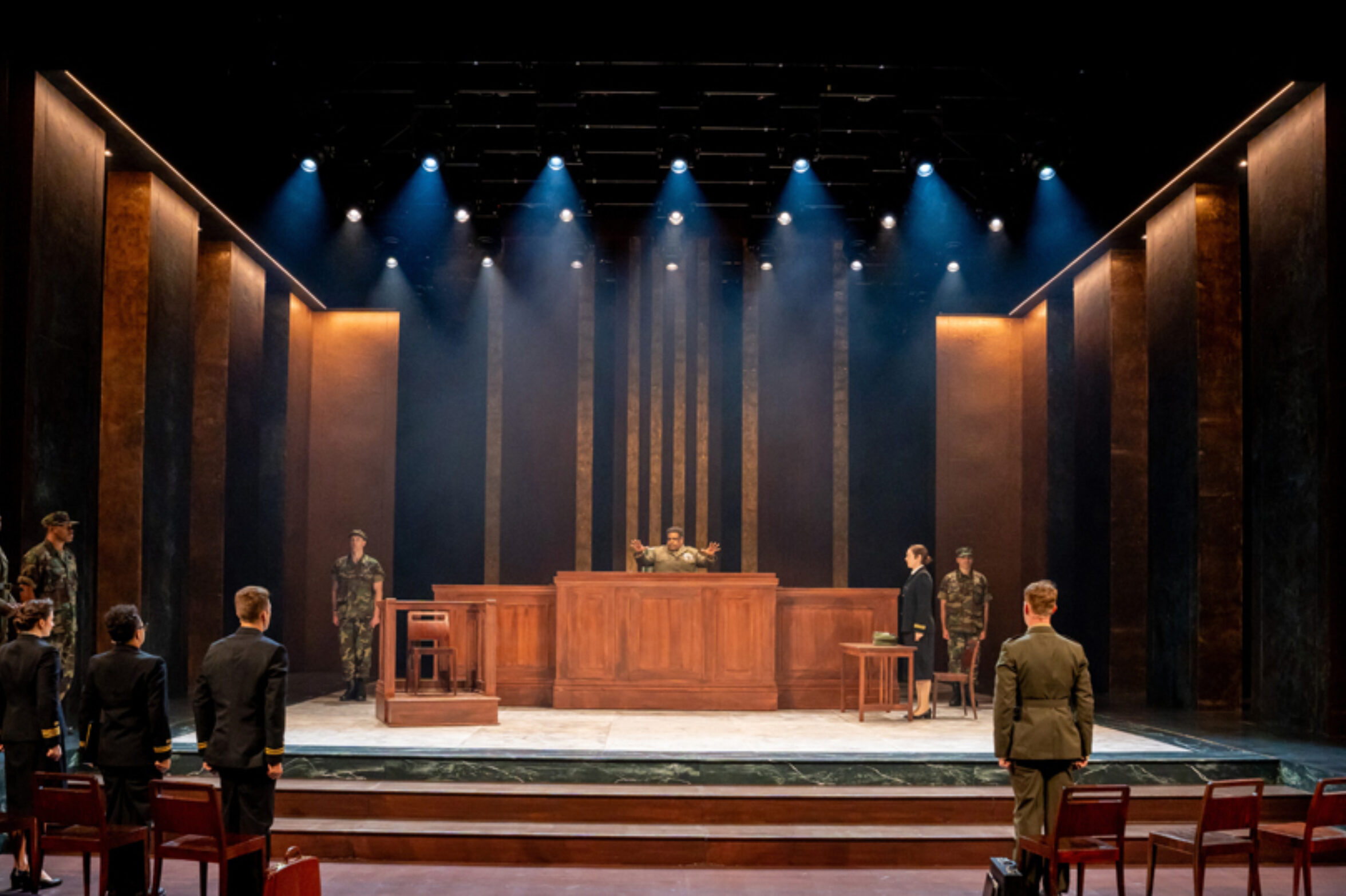
The design for A Few Good Men aims to evoke a world of formality, structure, and hierarchy. The architecture of the set draws inspiration from multiple sources: the strict order of the military, the monumental geometry of the Pentagon, and the solemnity of a war memorial. Together, these influences create a space that is both institutional and reflective, where precision and authority meet the weight of moral reckoning.
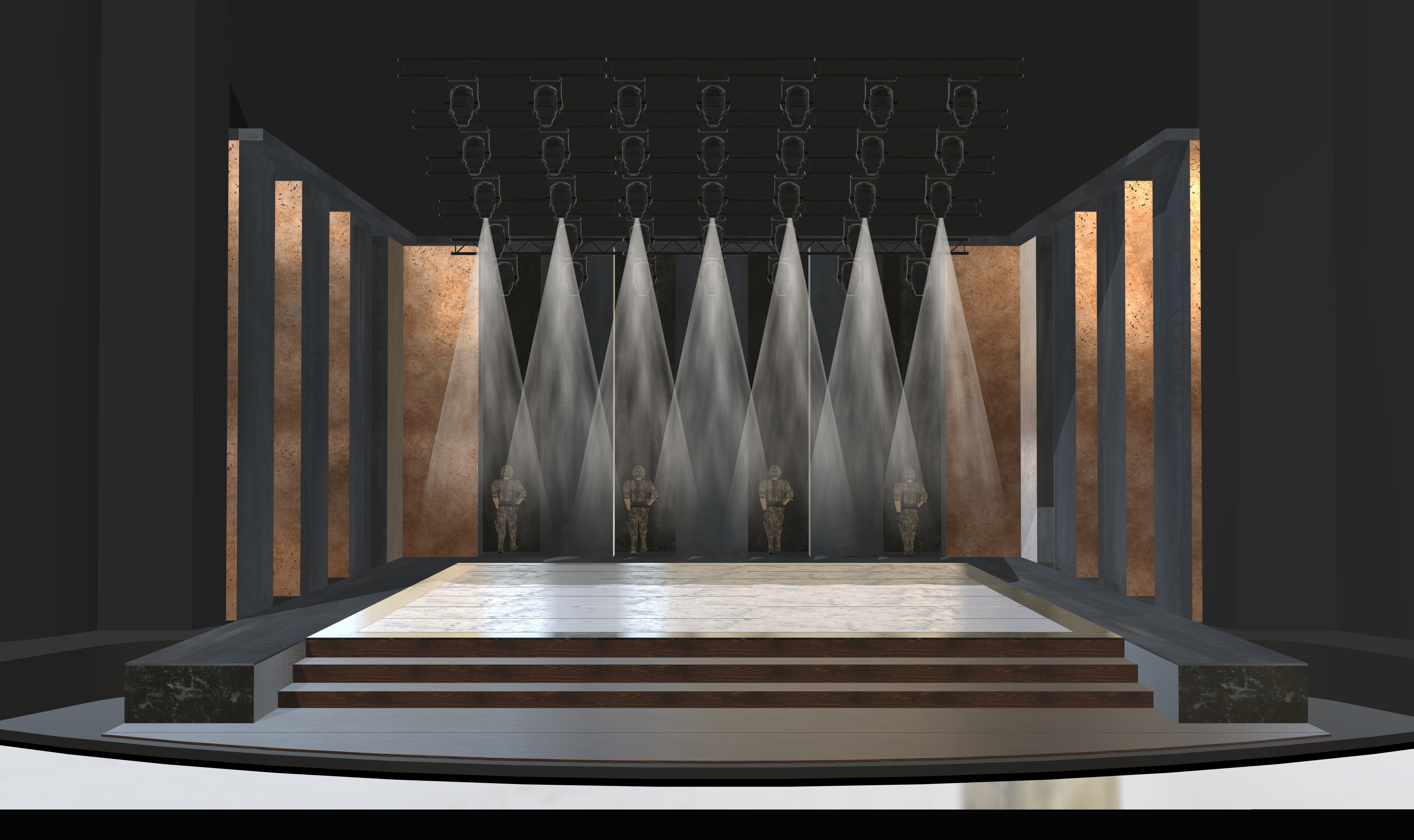
The formality of the military is emphasized by the symmetry and spatial organisation of the set, with dark bronzed surfaces and a granite floor grid reflecting a system based on order. A wide, open stage allows the characters to activate this space as though players on a board, their precise choreography shifting rapidly between scenes, while the surrounding columns and corridors become a structure of containment, power, and secrecy – Jessep’s ‘world that has walls’.
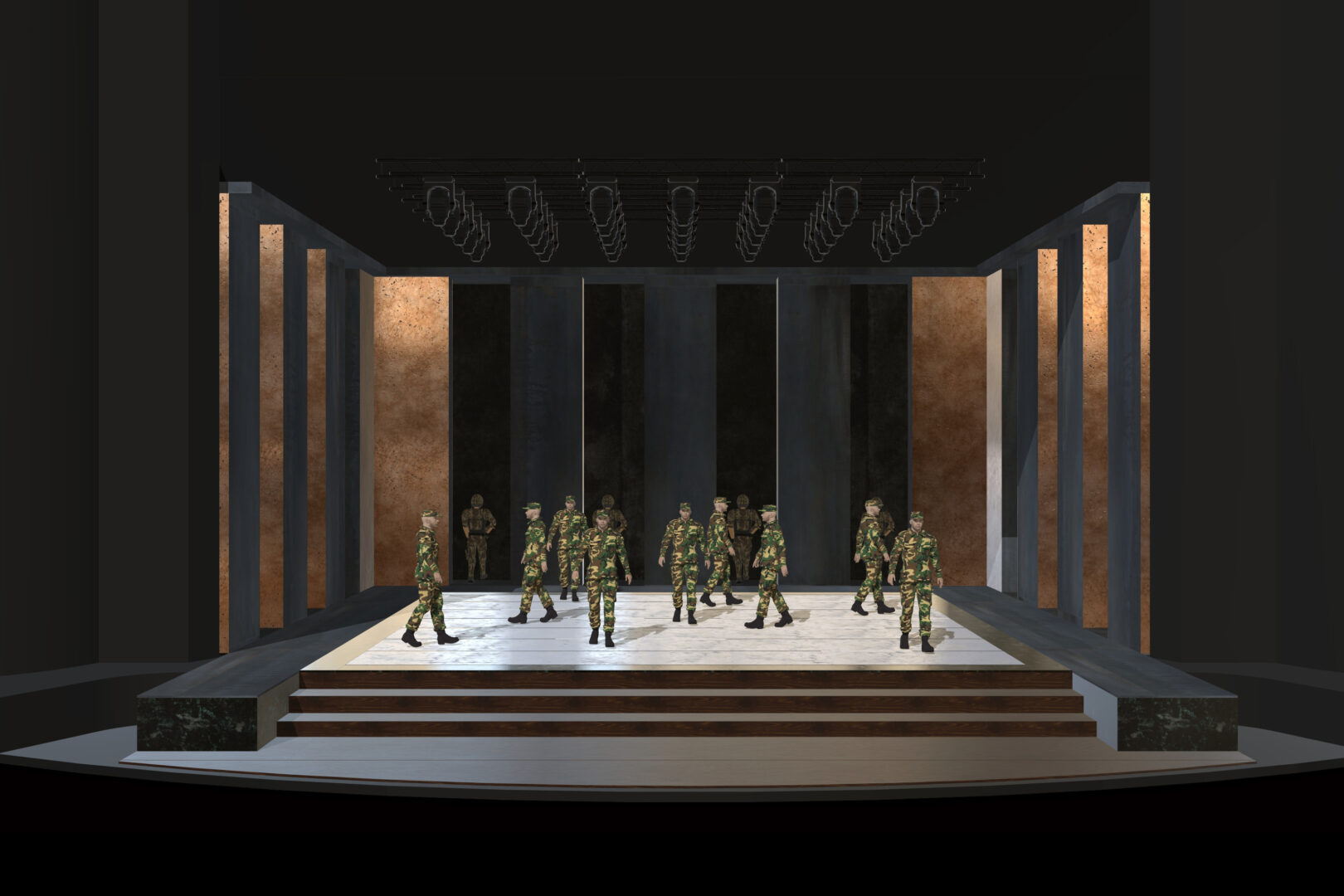
A space that is both institutional and reflective
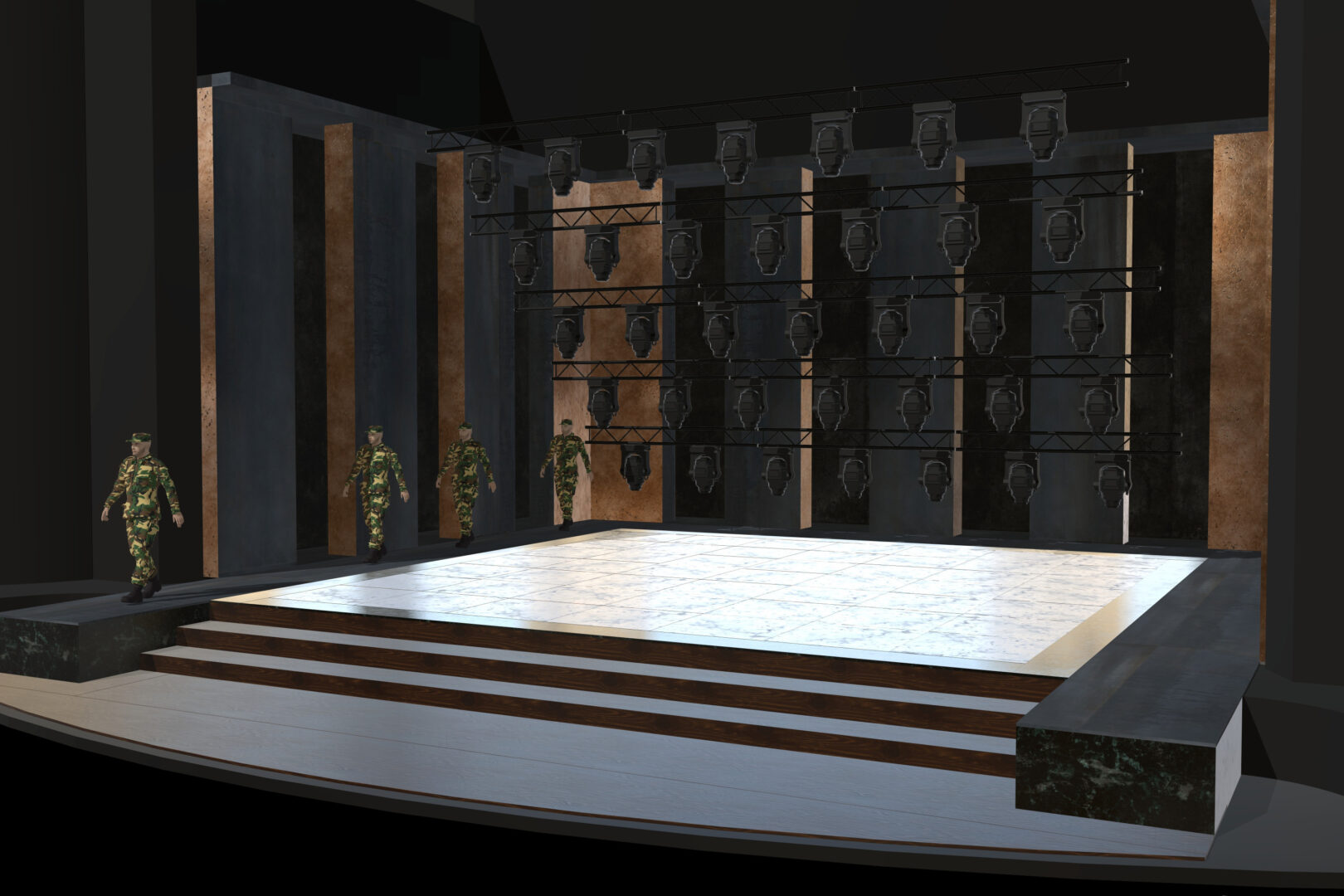
At the same time, the set becomes both courtroom and monument where questions of personal honour, loyalty, and truth are tested as well as commemorated.
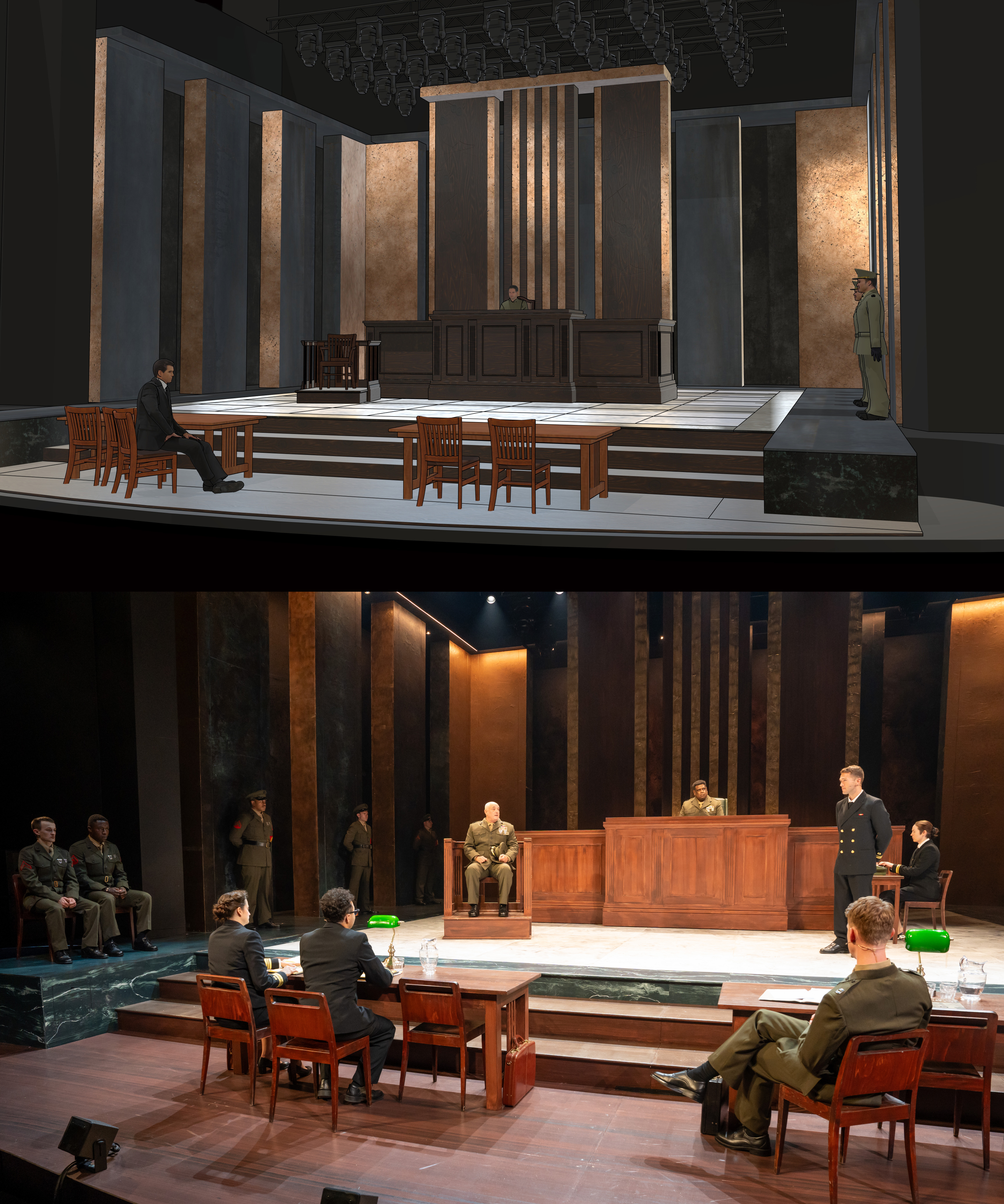
Visually, we are reminded we are in 1986 by small personal details; an 1980s gym bag, the shape of a whiskey bottle, the few moments of civilian clothing breaking out of the uniformed ranks. Further transporting the audience to the era, Mike Willmett’s composition and sound design draw on iconic music from that decade to underline the action with a complex intensity.
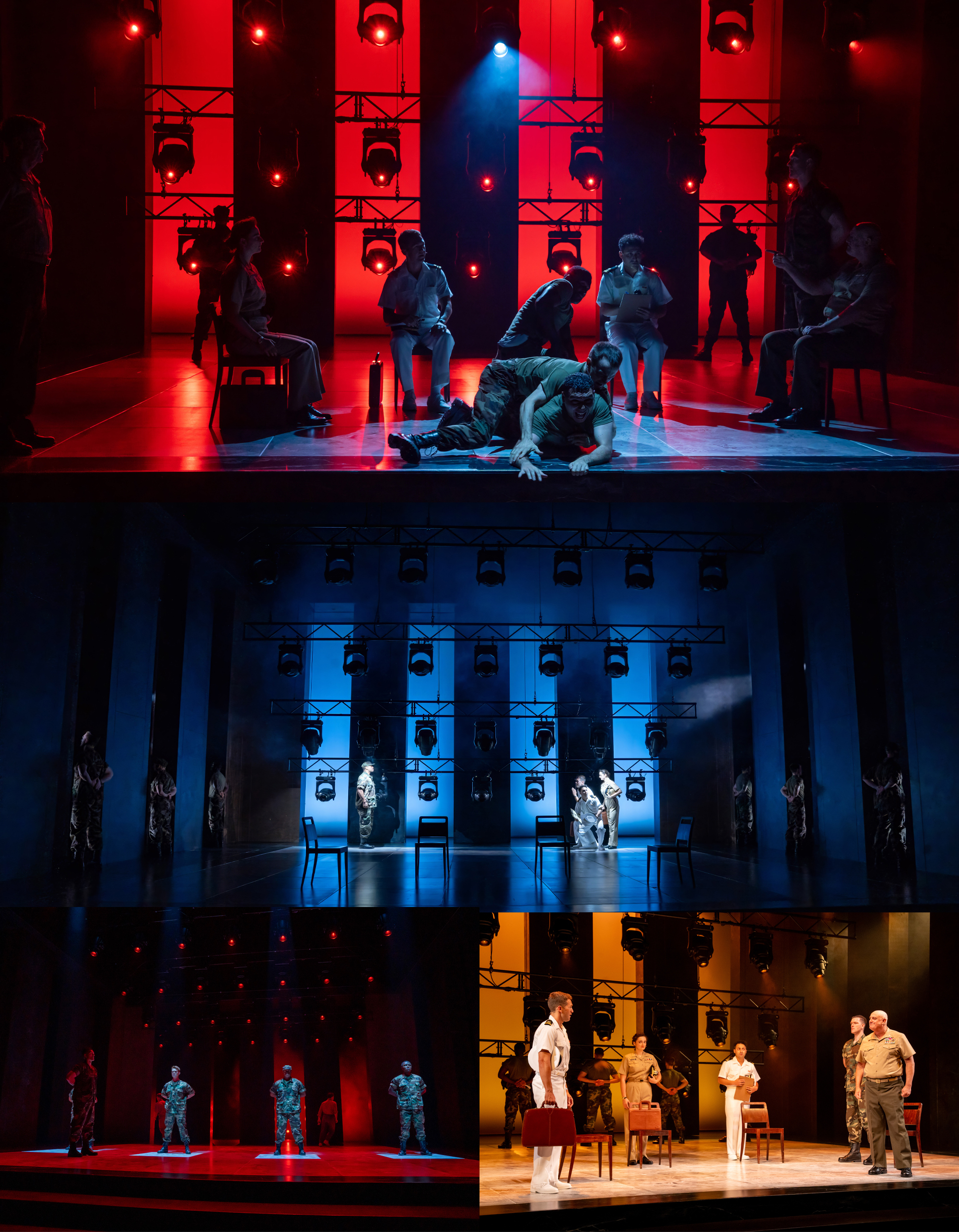
Light and shade play a vital role in shaping this world, and Ben Hughes’ lighting design is integral. An onstage grid of lights is ever-present. Part light and part weapon, these lights pick out faces and bodies evoking the harsh glare of interrogation and the clarity of revelation. Surrounding shadow suggests secrecy, doubt, and moral ambiguity — what is hidden and what is revealed. This dynamic between illumination and obscurity reflects the play’s central conflict: the search for truth and integrity within systems built on order, hierarchy, and loyalty.
Simone Romaniuk
Set and Costume Designer