Designing the World of The Great Gatsby
Set and Costume Designer Christina Smith builds The Great Gatsby around the ideas of memory and illusion. Rather than recreating the 1920s, the production presents a landscape shaped by recollection — vivid, heightened and deliberately constructed. As wealth and glamour shimmer on the surface, the mechanics of the theatre remain visible, gradually revealing the machinery that sustains the spectacle.
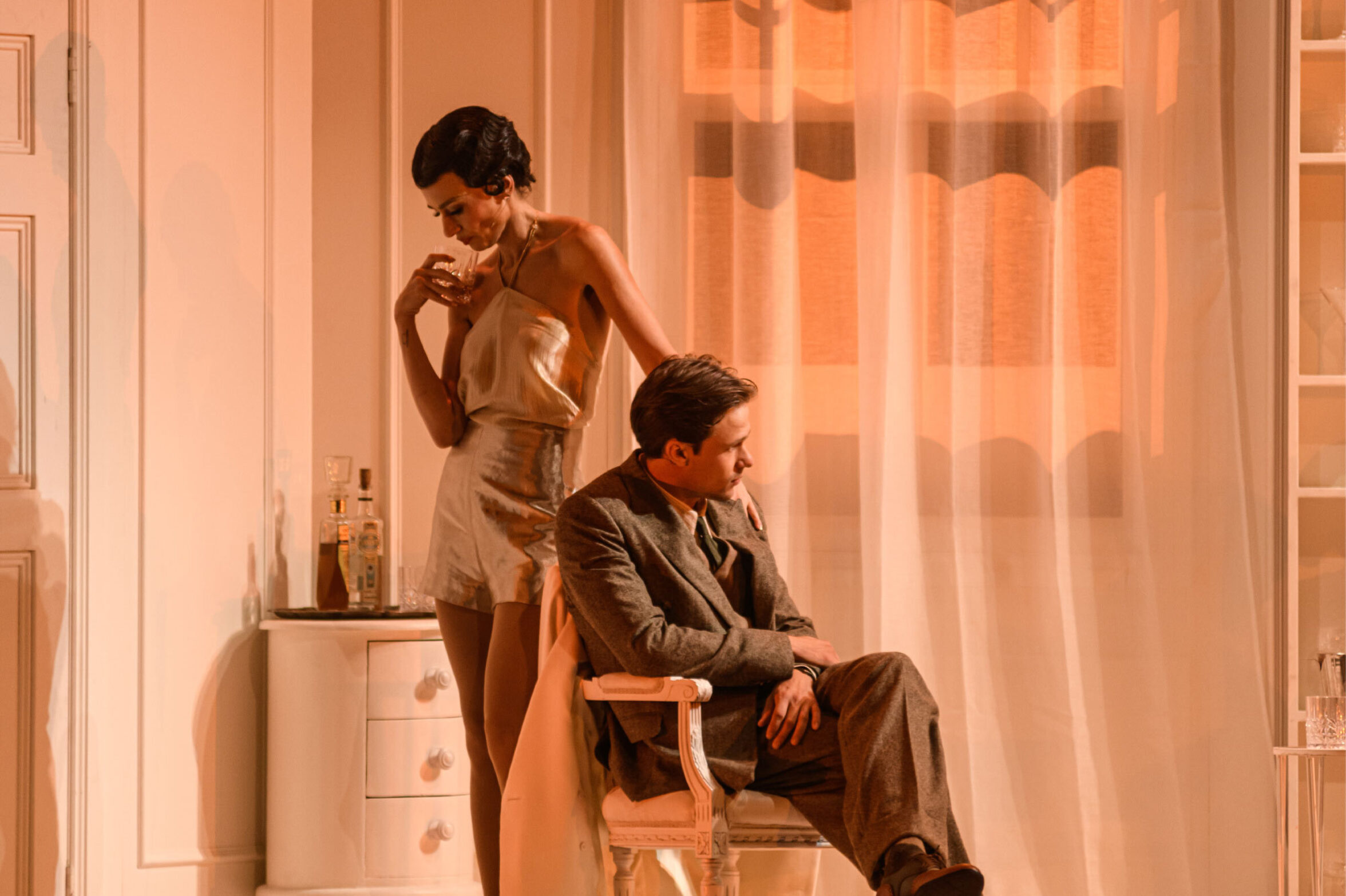
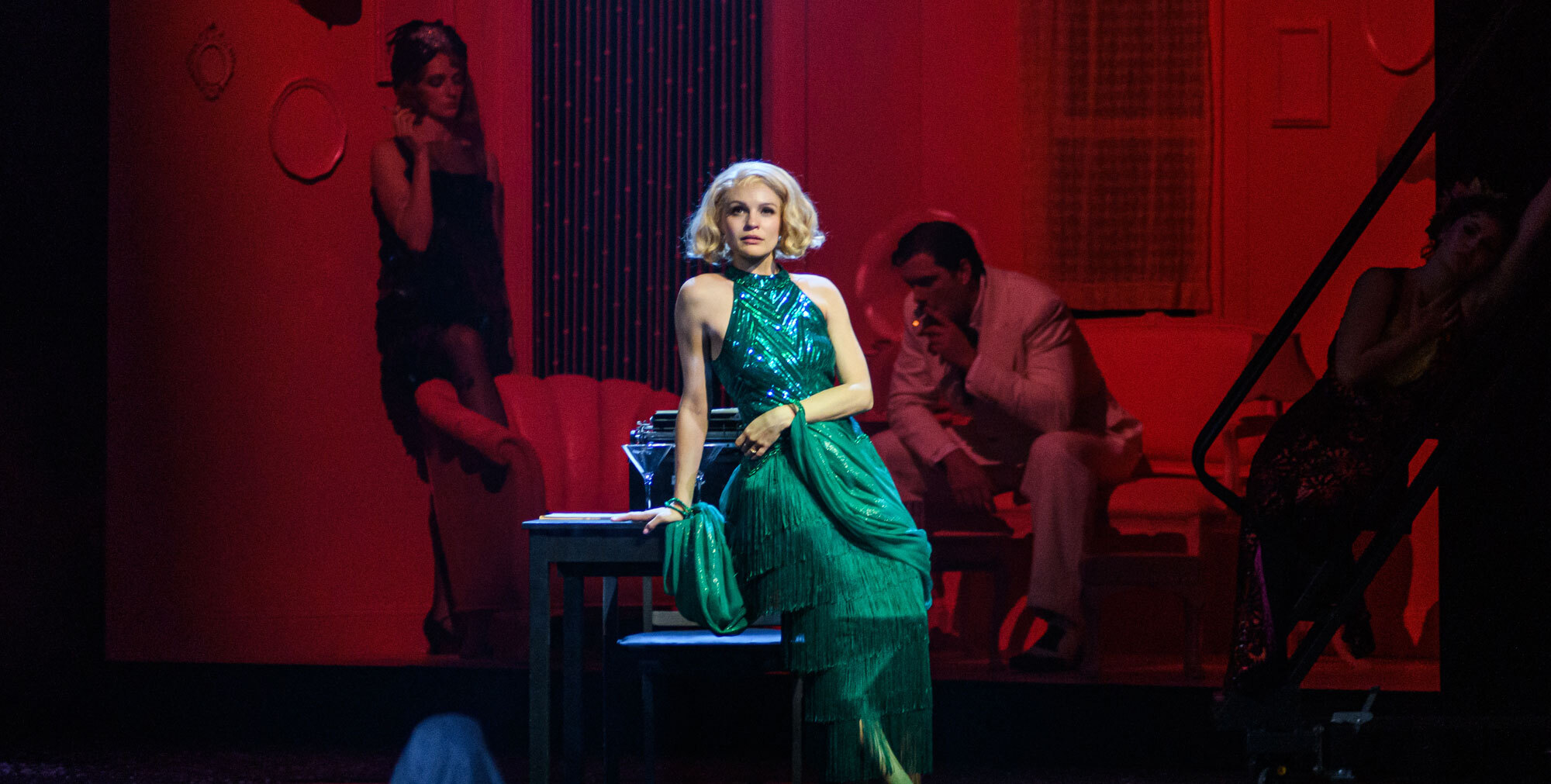
This adaptation of The Great Gatsby is designed around the key ideas of memory and illusion. The world of the production is not a fixed or reliable reality, but a landscape shaped by recollection which is vivid, heightened, fragmented and incomplete. This approach informs both the set and costume design, where elements are deliberately exaggerated or simplified to reflect the way memory distorts experience, such as a single dominant colour that overwhelms and drenches a scene, suggesting how certain impressions linger more strongly than others whilst the finer details dissolve into the abstraction.
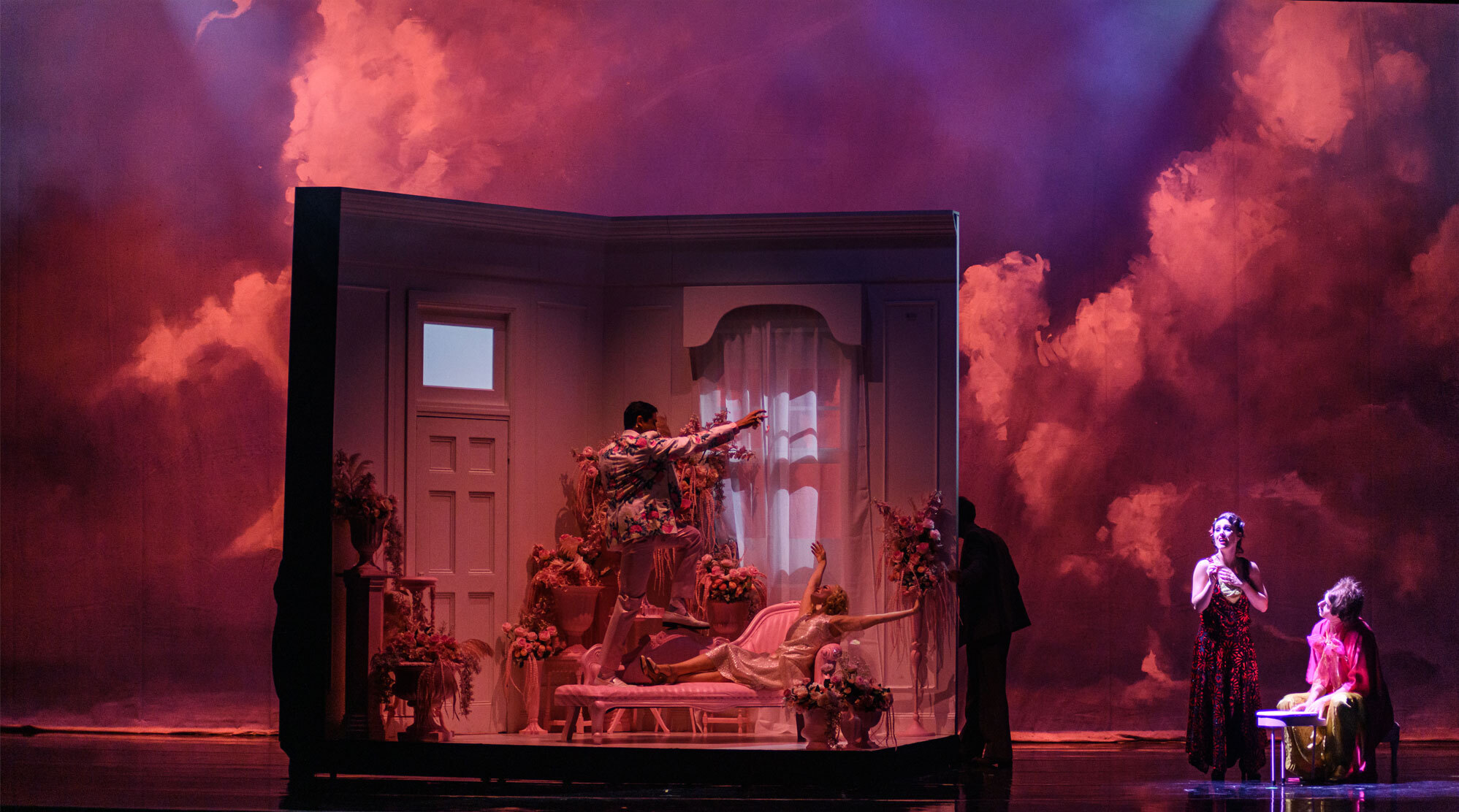
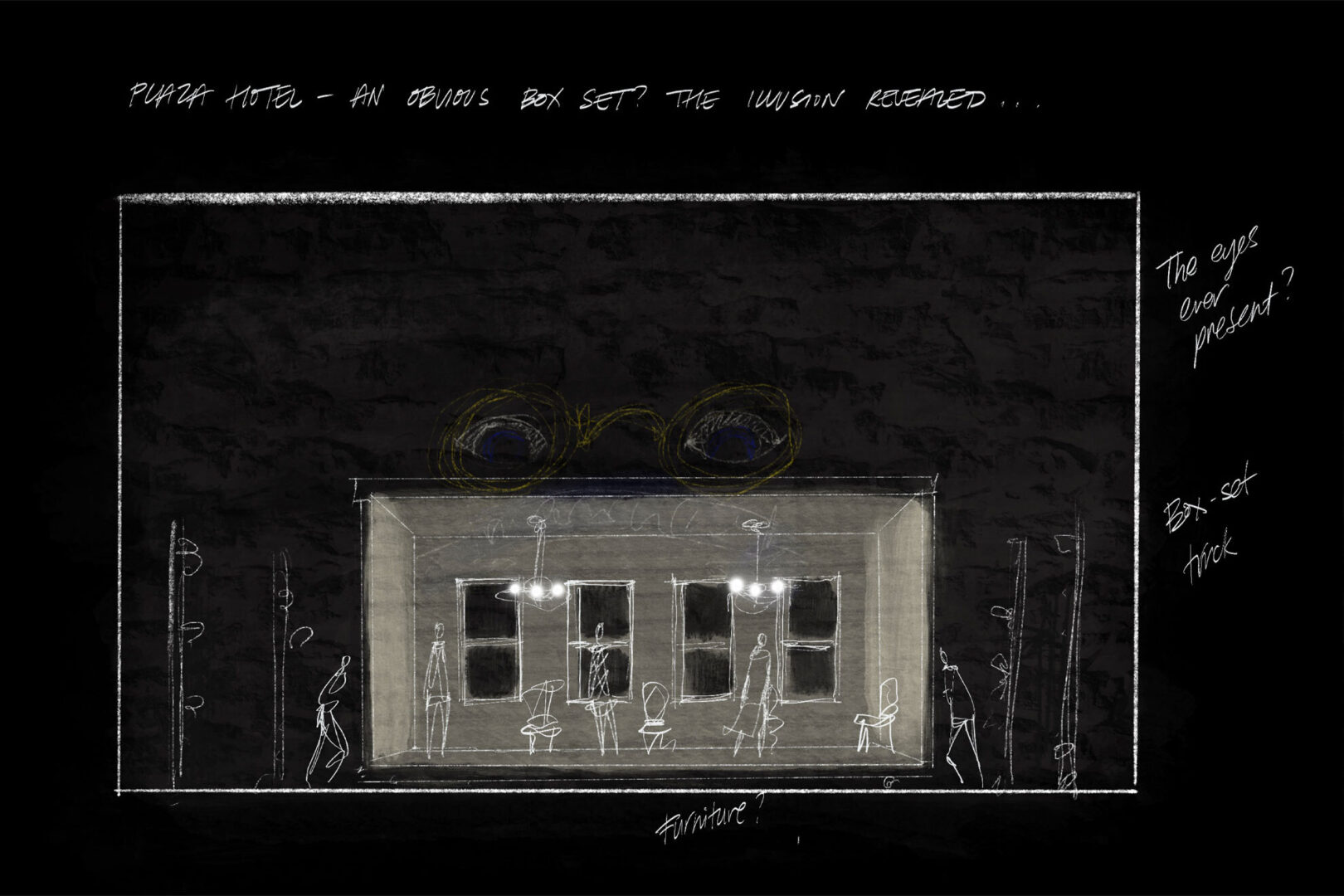
A landscape shaped by recollection — vivid, heightened, fragmented and incomplete.
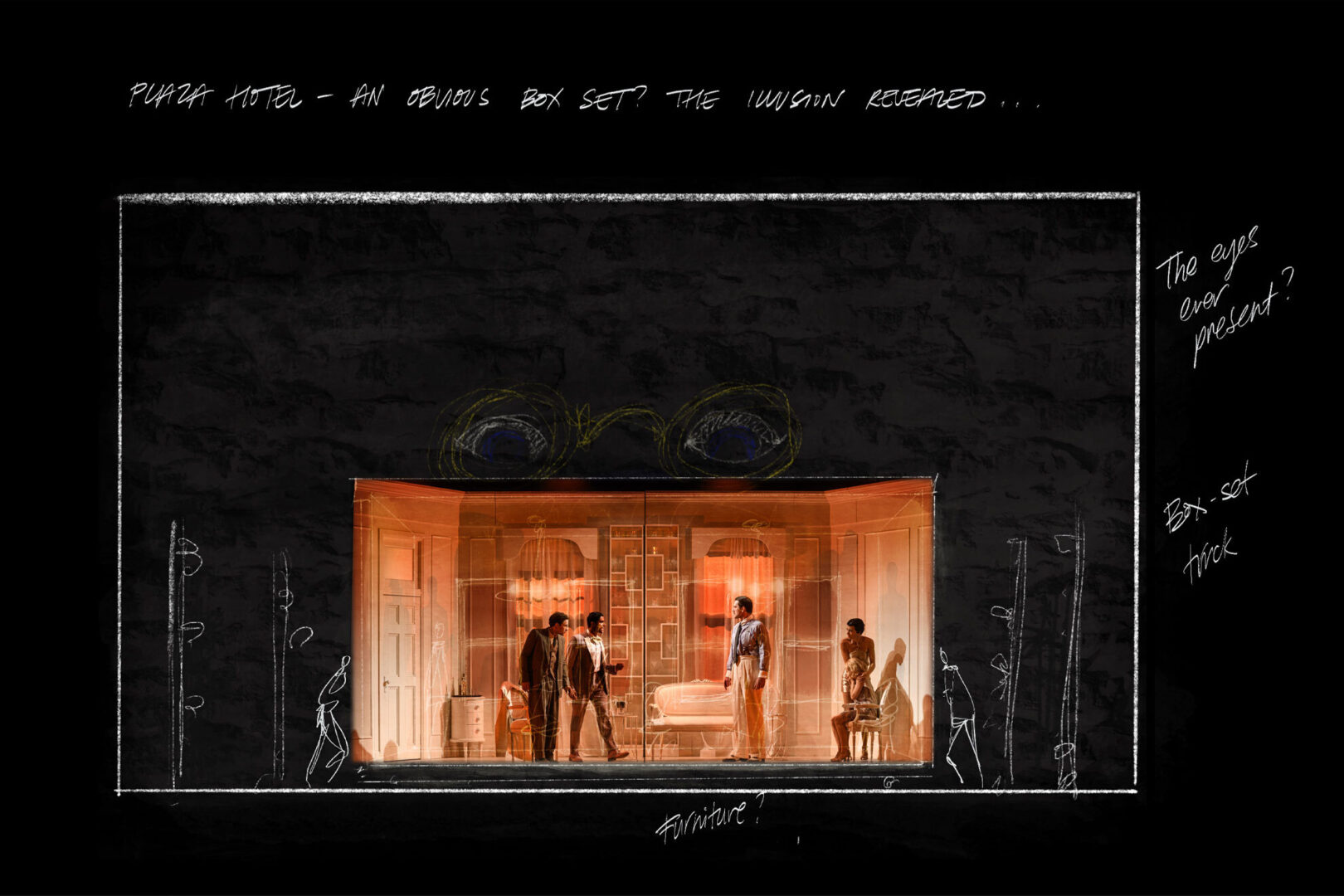
Original set concept sketch overlaid with realised production image. Design by Christina Smith. Photography by Joel Devereux.
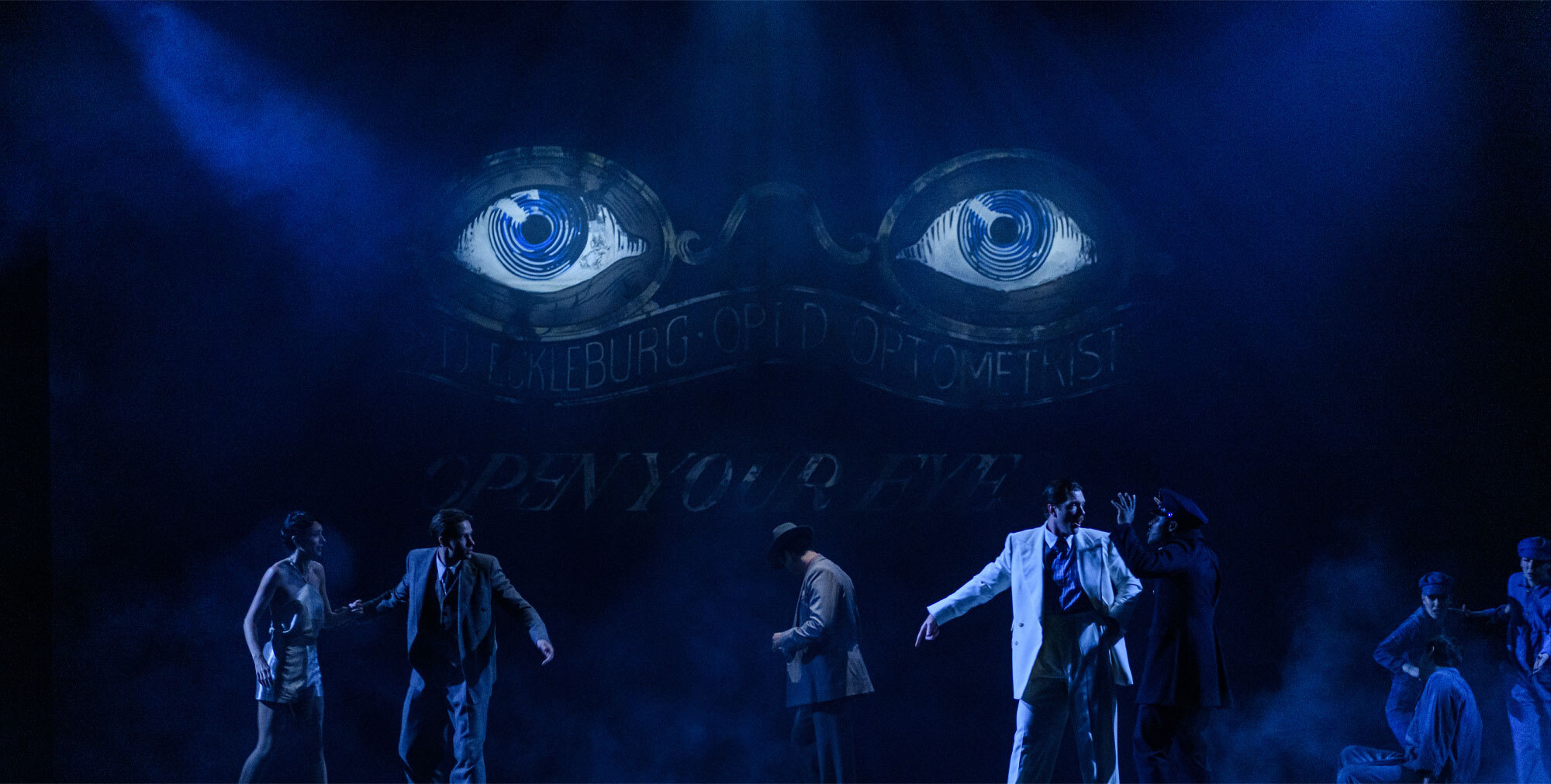
The notion of illusion operates in parallel, with wealth and glamour presented as a seductive veneer, featuring surfaces that promise fulfilment but conceal emptiness beneath. These facades are gradually revealed to be constructions, exposing the labour and machinery required to sustain them. This is embodied through the meta-theatrical presence of the Valley of the Ashes, which is revealed as the industrial world of the theatre itself. Scenic transitions reveal rigging and backstage mechanics, undermining the fantasy and reminding the audience of the work that underpins the shiny spectacle. Presiding over this world are the ever-present eyes of T. J. Eckleburg, rendered as a faded advertisement on the rear wall of the theatre. They function as a silent witness, surveying the characters’ attempts to sustain their illusions and serving as a distant and passive moral presence.
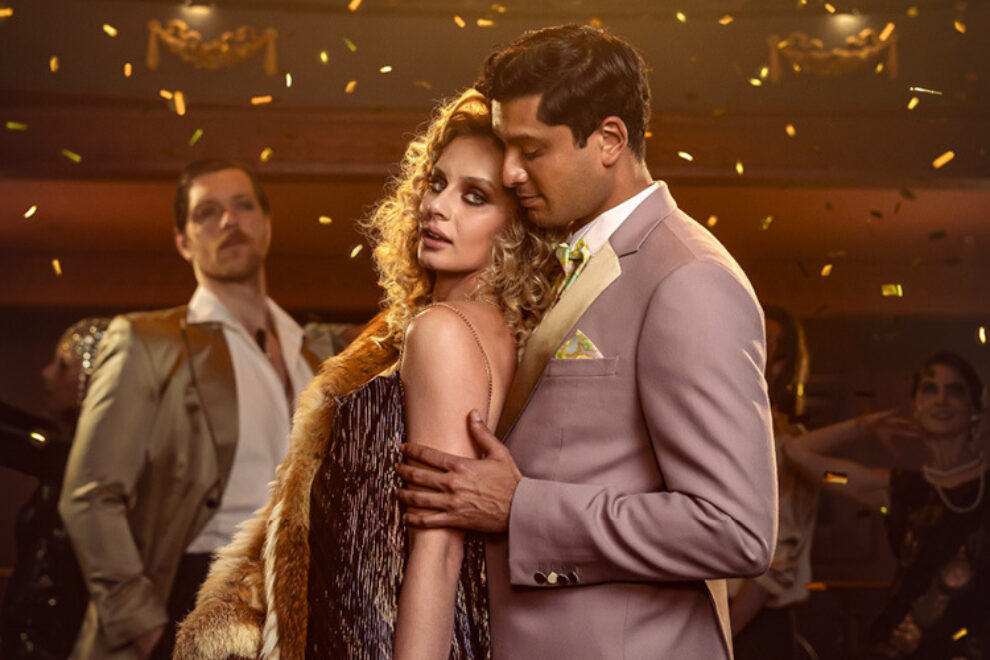
While the 1920s provides an essential stylistic reference point, the design does not attempt historical replication. This is not a museum reconstruction of Fitzgerald’s era, but a contemporary interpretation shaped for a modern audience. Costume incorporates anachronistic elements from later periods through to the present day. Characters who are emotionally or ideologically trapped in the past remain closer to period dress, while those who embody progress or forward momentum adopt increasingly modern silhouettes.
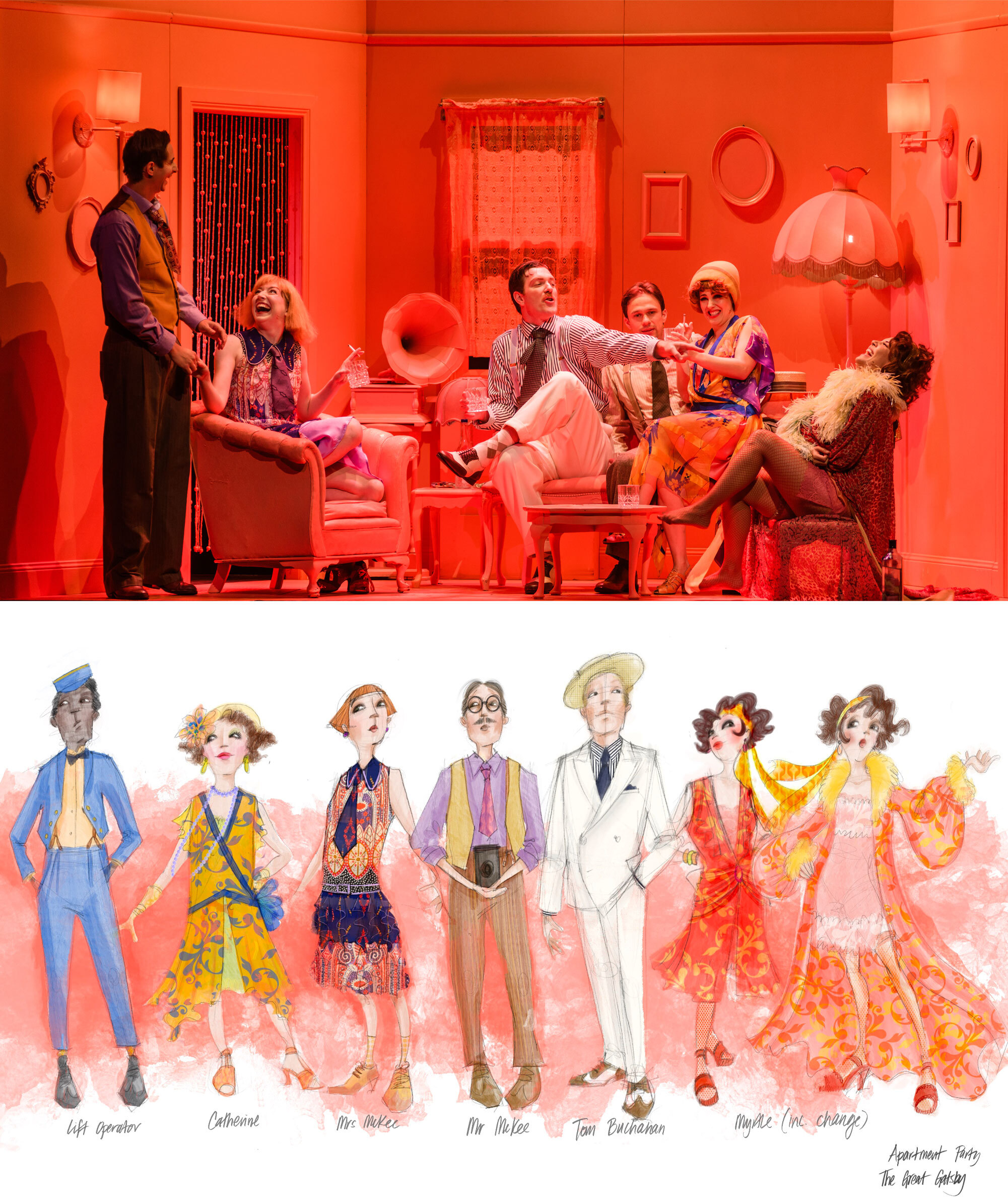
What you see on stage is not only the work of the performers, writers, directors and design team, but a reflection of the skilled artisans—costume makers, scenic artists, workshop and props staff—whose labour gives form to ideas and makes the world of the play tangible. I am eternally thankful for their dedication and artistry.
Christina Smith
Set and Costume Designer