Legends in the Limelight
Seven of Australia’s most celebrated actors unite for a landmark production of Patricia Cornelius’ Do Not Go Gentle.
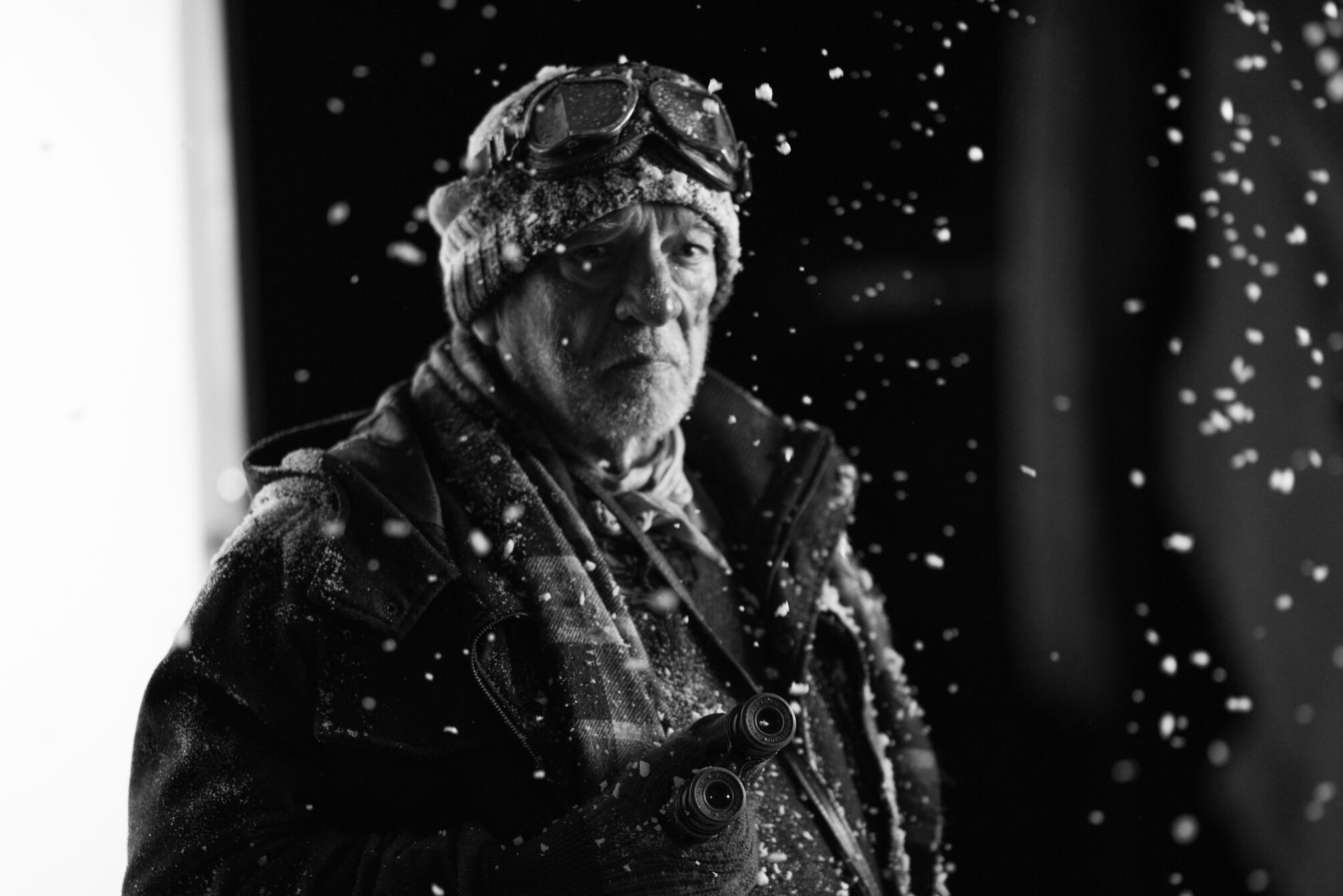
Do Not Go Gentle is more than a play – it’s a theatrical event that honours both artistry and legacy.
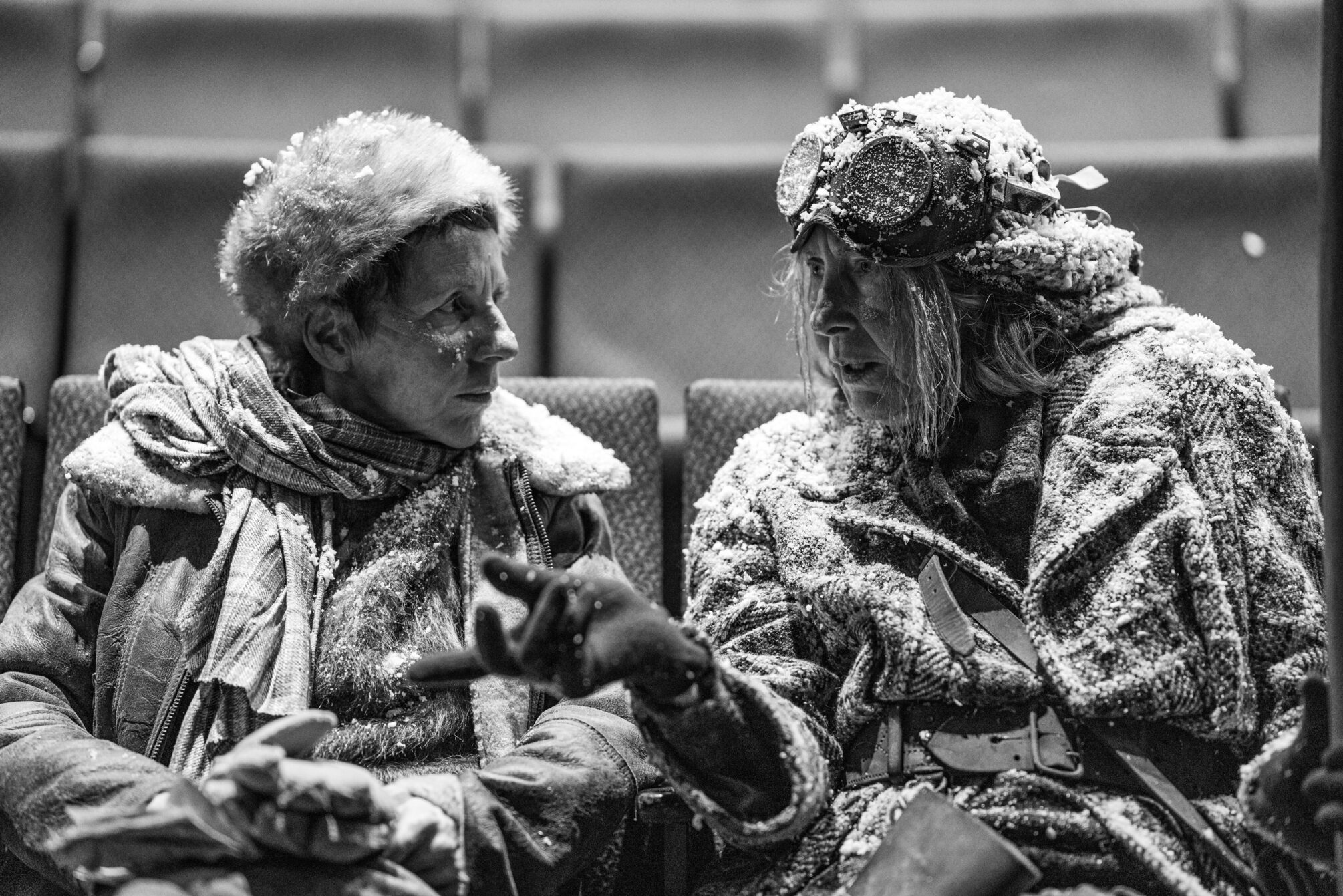
Patricia Cornelius’ acclaimed work reimagines Robert Scott’s Antarctic expedition as a powerful metaphor for the trials of later life, confronting the inevitability of decline with sharp wit and profound humanity.
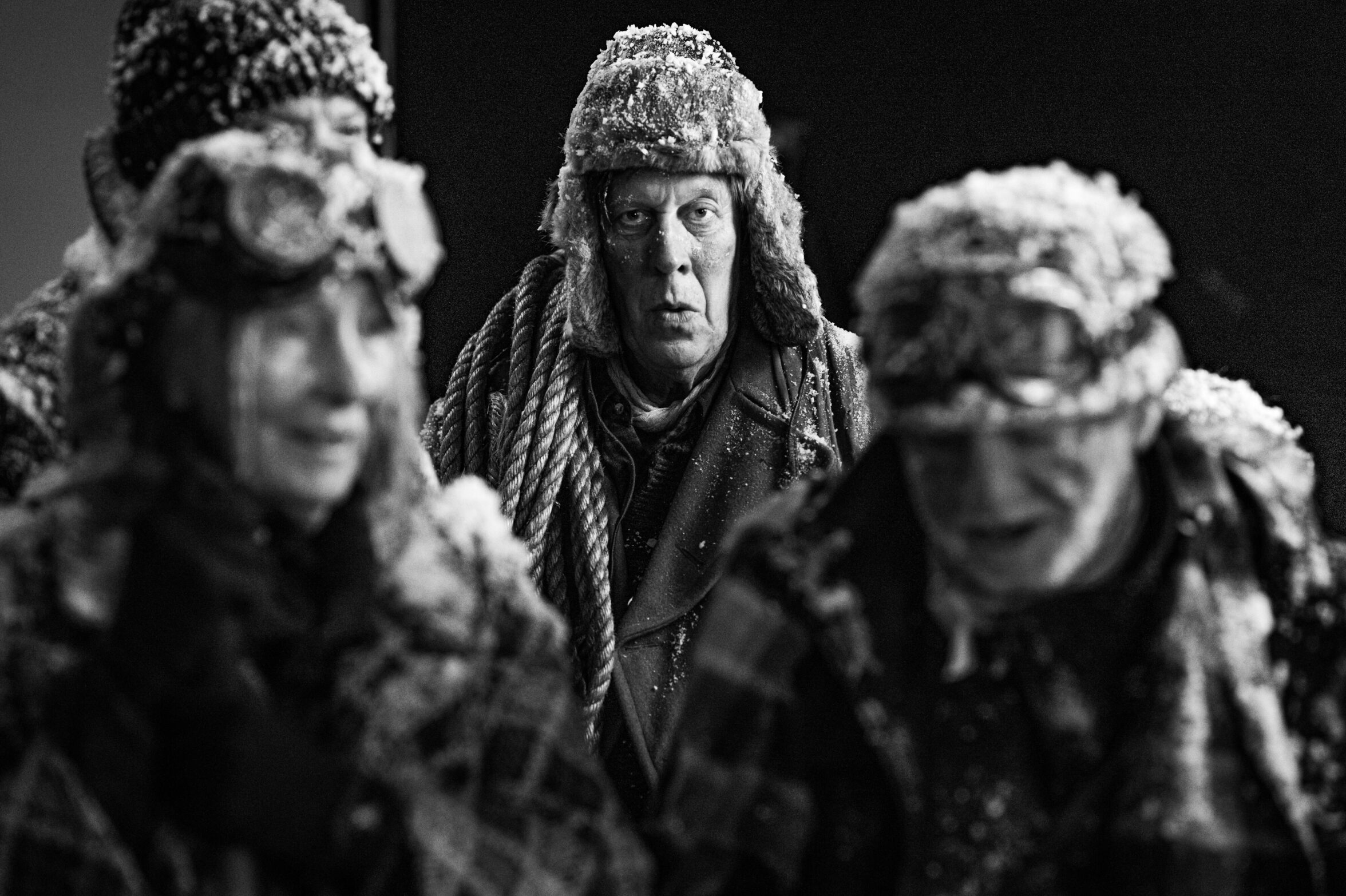
At its heart is an extraordinary ensemble of veteran actors – artists whose voices and craft have shaped Australian theatre. Together, they now share the stage in a story that reflects their own journeys of age, memory and endurance.
Jennifer Flowers
“One last glorious adventure into old age.” That’s how Jennifer Flowers describes Do Not Go Gentle, and it’s what excites her most about returning to the rehearsal room. “The Antarctic metaphor is a challenge to embrace this journey with the same resilience and grace the explorers had, and I would hope their heroism and courage would inspire all of us.”
Flowers has carried that sense of discovery through every stage of her career. From acting to directing to teaching, each discipline has shaped the other, broadening her devotion to the written word. “Bringing a script to life in real time is one of the great gifts of theatre,” she says. “Character, meaning, musicality, subtext, rhythm, story… the more deeply we dig into a text, the more that communicates to an audience.”
It’s a love affair that began in childhood. She still remembers the thrill of donning a purple cloak and paper crown at the age of five and “swanning about to a nursery rhyme.” For Flowers, Do Not Go Gentle is the perfect invitation to keep swanning – this time into the epic unknown.
Christen O’Leary
Christen O’Leary’s connection to Do Not Go Gentle is both professional and deeply personal. “I do feel I am venturing into a new part of my journey,” she reflects. “I’ve now lost both my parents, my children are young adults and I’m fast approaching 60. It takes resilience to face this life, but there is spirit and grit and beauty in every human being right up until that final breath.”
That spirit and beauty have punctuated many of O’Leary’s defining career milestones. She recalls the thrill of her first professional mainstage role with QTC in A Month in the Country, directed by Robyn Nevin. Another landmark came with her acclaimed turn as Judy Garland in QTC’s award-winning End of the Rainbow. Yet the true “prize” was Wesley Enoch’s The Sunshine Club, where she met her now-husband, musician and composer Andrew McNaughton.
At the heart of it all lies a lifelong devotion to the stage. “My mother first drew me to the stage,” O’Leary recalls. “She was passionate about the arts, a drama and music teacher, and she taught me throughout my childhood.” That early spark has carried her through decades in theatre – even if, as she admits, her “love” for performing can waver with age. “But inspiring performances from others always reignite my own passion.”
Steven Grives
Actor Steven Grives has spent more than six decades on stage and screen, but at 76, he finds Do Not Go Gentle striking closer than most. “It resonates every single day.” He extrapolates, using an image as simple as it is profound. “I look at a tree and think about how strange it is that it has witnessed so many human lives that have come and gone, including my own, and yet it still grows strong.”
For Grives, that is the heart of the play: endurance in the face of loss. “Life is about resilience. Every one of us will experience the pain of losing someone we are close to.” Those experiences inevitably lead him to the big questions: why life can be cruel, what it means to exist and what lies beyond. “Life is merely a stage and our consciousness lives on, maybe in a different form or dimension, but it cannot be destroyed. We are all cosmic dust, and as such, we return
to the cosmos.”
He admits he’s “an old hippy from way back”, fascinated by moments of uncanny connection. “How many times have you telepathically tuned into another’s thoughts? ‘I was just about to say that.’ For me, the brain is just a receiver like a television, but the content, where does it come from and why?” In Do Not Go Gentle, those questions don’t demand neat answers. Instead, Grives says, they are shared with an audience – strangers gathered in the dark, holding space for endurance, mystery and compassion.

Andrew Buchanan
“My mother is in aged care – I find the work hits me on a very deep and personal level.” Do Not Go Gentle doesn’t feel metaphoric for Andrew Buchanan; it feels immediate. “Time teaches you that life cannot be controlled. It demands you be courageous, honest and open. We all will march on into the unknown. Get your bearings and pack a compass.”
That compass has guided Buchanan through three decades on Queensland stages. His path is lit by productions remembered for their people and spirit, more than their prestige: the thrill of sparring with the late Carol Burns in The Female of the Species, the pride of a “distinctly Queensland” Othello, the rare joy of sharing the stage with his wife in L’Appartement. And then there was the juggernaut of Boy Swallows Universe: “What a ride!” he grins.
If the work has taught him anything, it is to trust. “Early on, I was reaching for a character – someone other than me. I didn’t really know who I was. Now I know that I’m enough.”
Marilyn Richardson
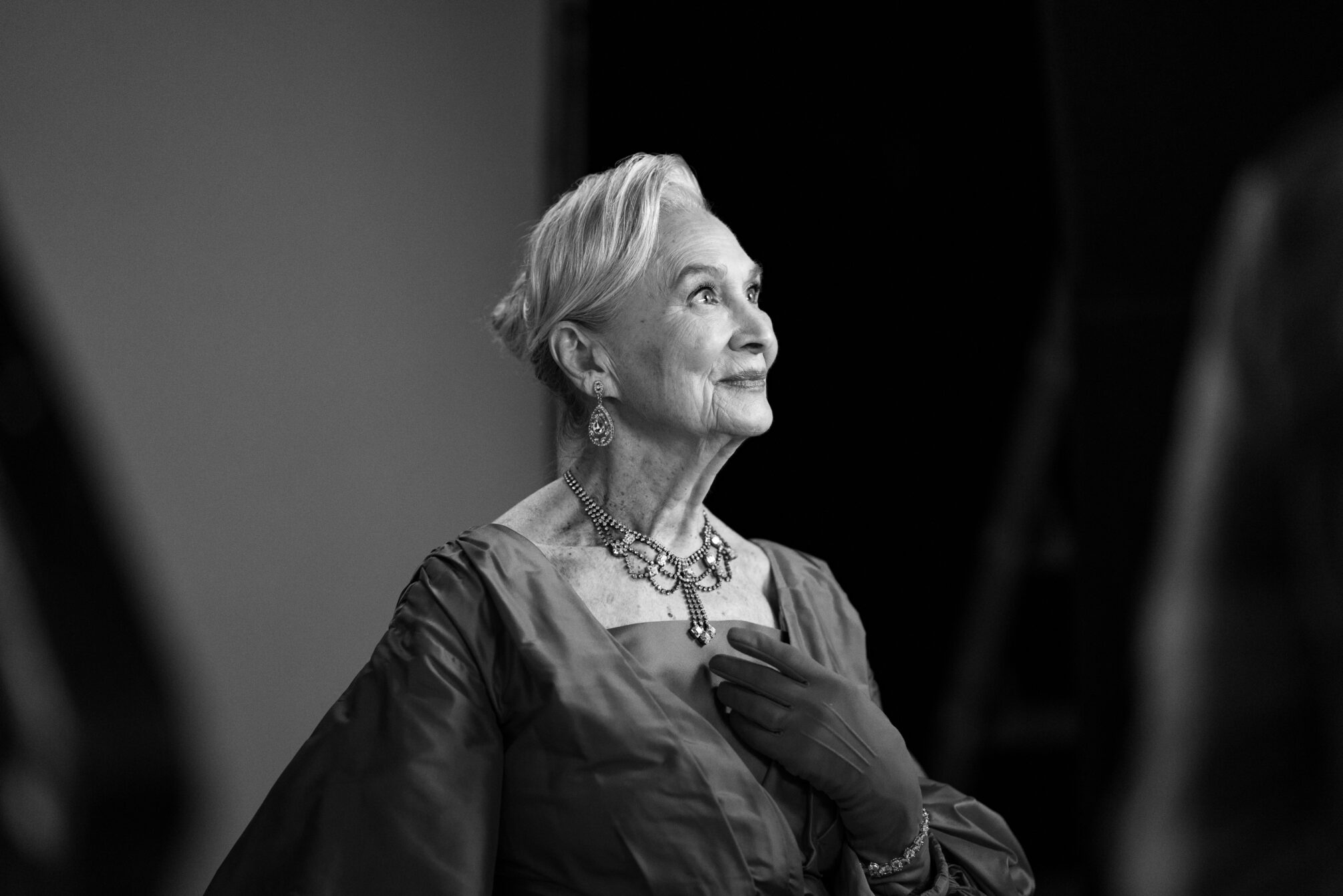
At 89, opera singer Marilyn Richardson continues to embrace new challenges. In 2023 she made her stage play debut in Sydney Theatre Company’s Do Not Go Gentle. Now, she reprises the role with QTC, continuing a journey as unexpected as it is inspiring. “Isn’t that simply life?” she says, reflecting on the Antarctic expedition at the heart of the play.
Music has been her guiding light from the very beginning. “Mother was a lovely classical pianist, Father played by ear – anything from ragtime to The Warsaw Concerto. I loved it all.” That foundation propelled her into an extraordinary career: Lulu and Salome in Switzerland, Aida in the Sydney Opera House Concert Hall with Don Smith, and Wagner productions where voice and orchestra seemed to shake the walls. Schoenberg’s Pierrot Lunaire became such a signature that it was affectionately known as “Marilyn’s Pierrot.”
Now, stepping into Cornelius’ play once more, Richardson is disarmingly direct: “This is a play about ageing, memory and resilience. I’m right in the middle of it all.”
Bruce Spence
“I’m 80 years old – that should answer the question,” Bruce Spence says with characteristic candour when asked how Do Not Go Gentle resonates with him. In his words, the play captures “simple folk at the end of their lives, attempting something monumental”.
Even in the face of frailty, he admires its spirit of adventure: “Despite dementia, constipation, arthritis, impending death, these characters choose adventure, to ‘fight the dying of the light’.” His hope for audiences is equally direct: “Never stop getting the most out of living, despite whatever affliction might come your way…
There is always something remarkable in everyday adventures.”
It’s a philosophy Spence has embodied throughout his remarkable career. More than 55 years on stage and screen have taken him from the wild invention of Melbourne’s Pram Factory Theatre – birthplace of the Australian Performing Group – to the global phenomenon of Mad Max 2: The Road Warrior, where his turn as the eccentric Gyrocopter pilot became iconic. What unites those extremes is a taste for the unpredictable and the grand, whether in a Carlton warehouse or on a Hollywood backlot.
William Zappa
“We all have moments when our ambitions are tested, and accepting success or failure is part of life’s lesson.” For William Zappa, Cornelius’ play feels like a mirror of life itself: bold, uncertain and demanding resolve. “There comes a time when all of these themes ring loudly and personally.”
Zappa has always sought out roles that tested him. Death of a Salesman remains a pinnacle – “a role that requires every aspect of an actor’s craft: physical, vocal, emotional, imagination, research and heart.” But great discoveries have come from elsewhere too: the ambition of Richard III, the passion of Antony, the wit of Don Juan, the guile of Thénardier. Most recently, his nine-hour adaptation of The Iliad stretched his artistry to its fullest, an odyssey of words and endurance.
Even with such a legacy, curiosity still drives him. “Acting is complex and it needs ego to get out of the picture... When one has survived in any industry for a long time, you’ve got better at what you do, and being able to pass on those skills is a privilege.”