Singing Soul: You Have to Feel It
Musical Director Nathaniel Andrew shares how breath, phrasing and feeling shape the sound of The Sapphires — and how four distinct voices become one powerful harmony.
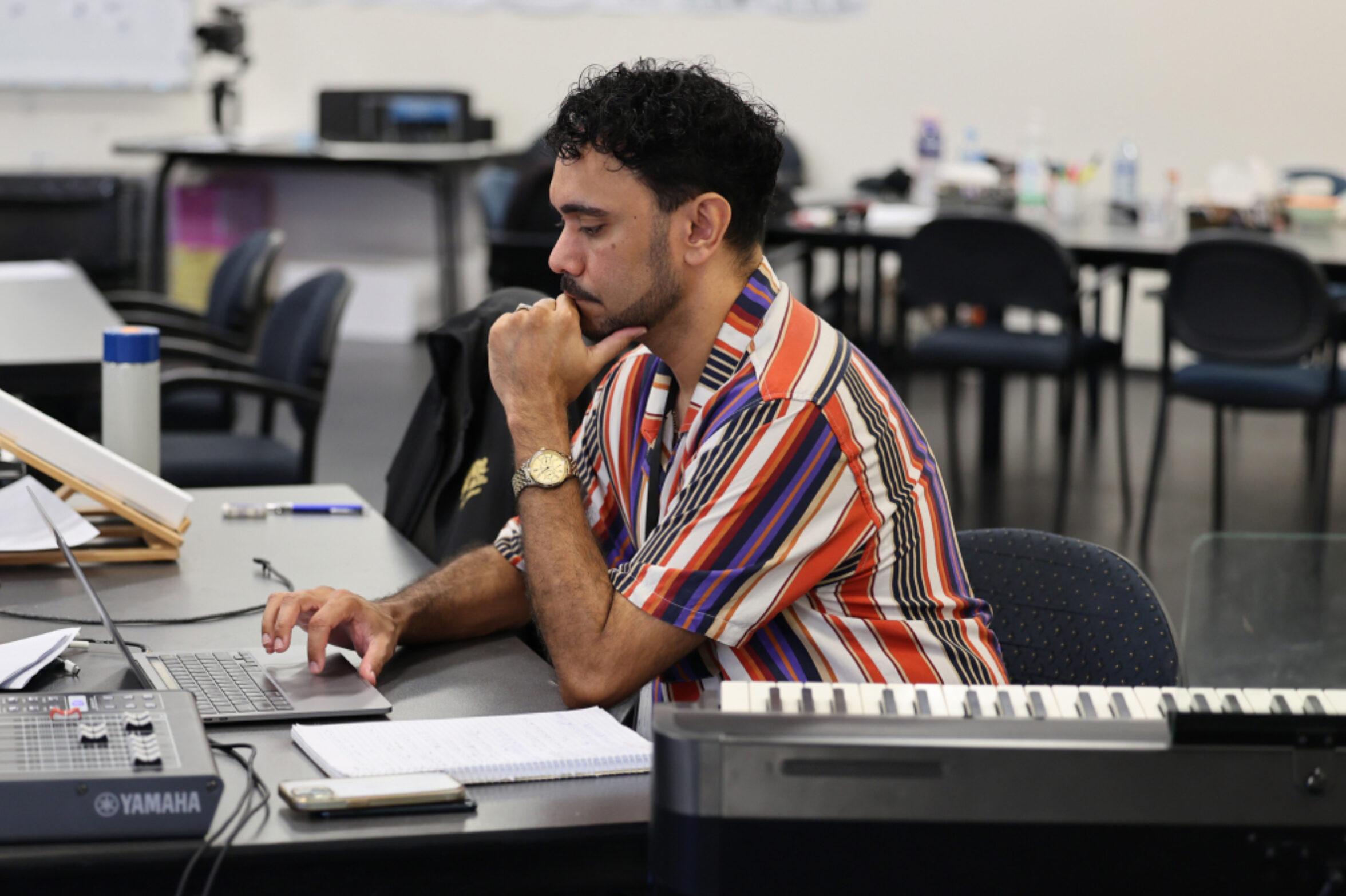
In the rehearsal room, the sound doesn’t start fully formed.
It begins carefully. One voice offers something, another waits to meet it, the group listening for where they sit together. Nathaniel Andrew, Musical Director for The Sapphires, notices that early delicacy in the room — not uncertainty, exactly, but care.
“No one wants to overstep too early,” he says.
For this revival, Andrew has created fresh arrangements that allow familiar songs to live inside this cast, this production and this moment. The work sits in how the music is approached — how it’s understood, where it comes from, and how each performer finds their way into it.
“When performers first step into this style, one of the biggest discoveries is that it’s not just about singing the notes ‘correctly’,” Andrew says. “It’s about understanding and feeling where the music comes from and what it carries with it.”
In practice, that discovery is often physical. Breath changes a phrase. A vowel changes where the sound sits. The smallest adjustment can release the voice from tension and let the music move more freely through the body.

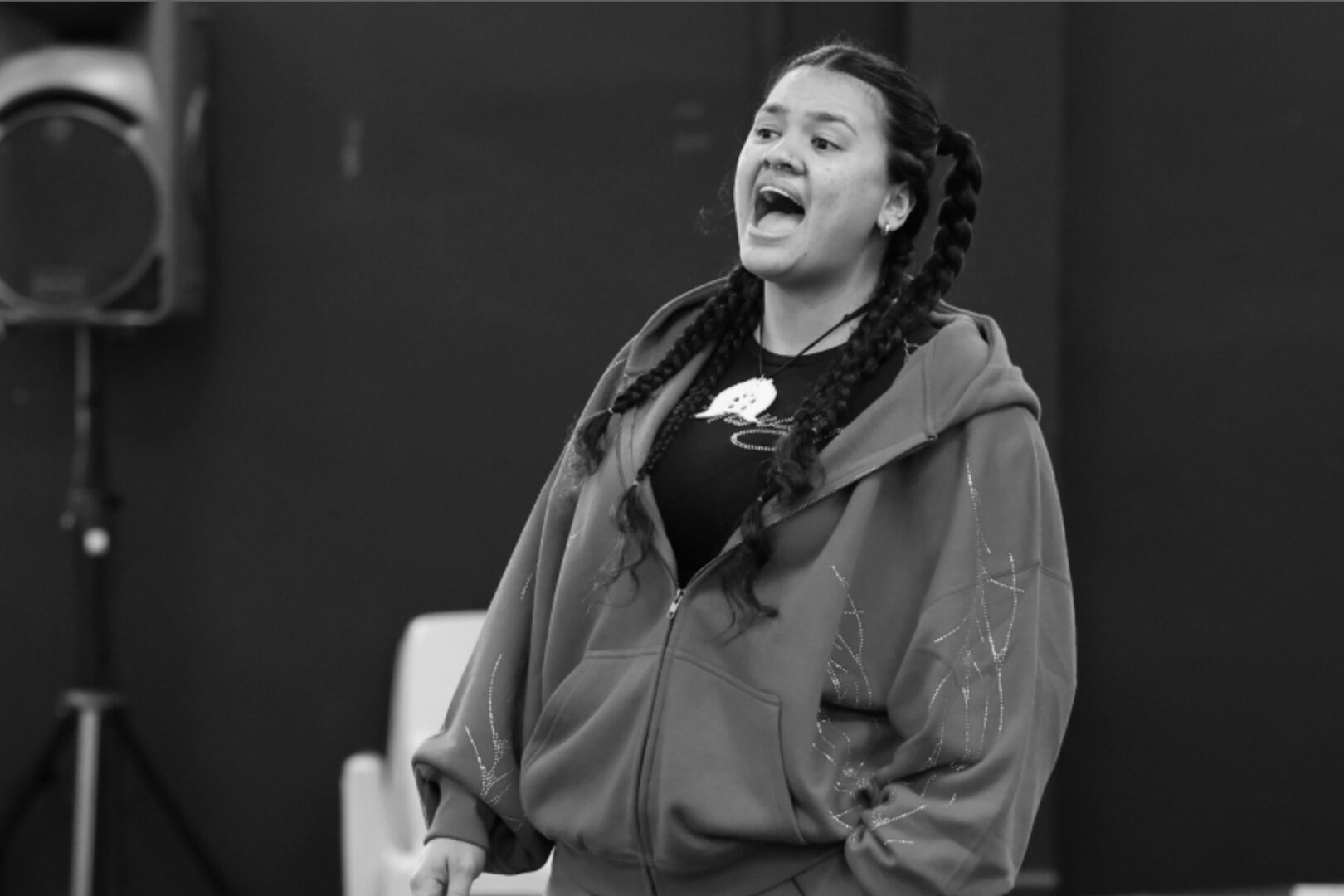
“Small shifts in pronunciation can completely change how the voice sits, how the sound resonates, and how the energy moves through the body,” he says.
Early in rehearsal, Andrew says, performers can want to act the song before it has settled. The feeling arrives before the body is ready to carry it, and the voice tightens around the intention. So the process shifts slightly — finding breath before volume, shape before force, trust before full release.
You can hear that change in the room. Voices come in slightly under, then stronger the next time. Someone holds back, then leans in. What begins as a careful exchange becomes something shared. You can almost hear the room relax: breath landing lower, shoulders releasing, the harmony beginning to sit where effort had been.
Each performer brings a different tone, instinct and emotional access to the music. Andrew’s arrangements don’t flatten those differences; they rely on them. The point is not for four voices to become identical, but for each to keep its own colour while finding the blend.
“Everyone has their own colour,” he says, “but together it creates something cohesive and powerful.”
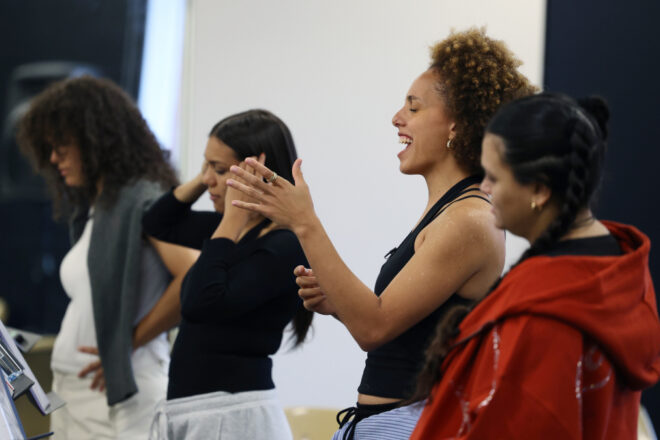
In The Sapphires, that blend is where the music settles. One voice leads, another supports, another colours the edge of the sound. The precision is there, but it doesn’t feel tight; it opens something up.
By the time it reaches the stage, those adjustments sit underneath the sound — breath, phrasing, language, the way each voice meets the others.
Andrew describes the moment a song really lands as something almost involuntary: a smile before thought, a foot beginning to tap, the chest tightening, the breath deepening.
“The music bypasses all the usual filters and goes straight to the soul,” he says.
And when asked what he hopes audiences feel in their body when the music lands, his answer is simple.
“Love and happiness.”