David Wenham: The Storyteller
It sold out at Sydney Theatre Company, drew daily waitlists and inspired the kind of reviews most actors can only dream about. Now David Wenham is bringing his extraordinary performance in An Iliad home to Brisbane.

Ahead of its Queensland premiere, David Wenham talks about the physical toll of becoming the Poet, the audience that changes the performance every night and why a 3,000-year-old story of war refuses to leave us.
Wenham sometimes orders his morning coffee with an exercise book and pencil.
It is one of the stranger consequences of performing An Iliad, a role that asks one of Australia’s most celebrated actors to command a stage for 100 minutes and carry thousands of years of storytelling with him.
The performance is so vocally demanding that, once Wenham leaves the theatre, he will sometimes stop speaking altogether.
“I often go into vocal shutdown – not speaking at all from the end of the performance until I warm up the following evening,” Wenham says.
“I carry an exercise book and pencil with me and use it instead of speaking, even ordering my morning coffee.”
It is a formidable feat of performance, and Sydney audiences responded accordingly.
When An Iliad premiered at Sydney Theatre Company in 2026, it sold out, audience members called daily searching for any available tickets and attracted a string of five-star reviews.
We’ll be talking about this play for years to come.
— The Sydney Morning Herald.
The Australian went further: “Theatre just doesn’t get any better than this”, while Limelight hailed Wenham’s performance as “a virtuosic display of storytelling”.
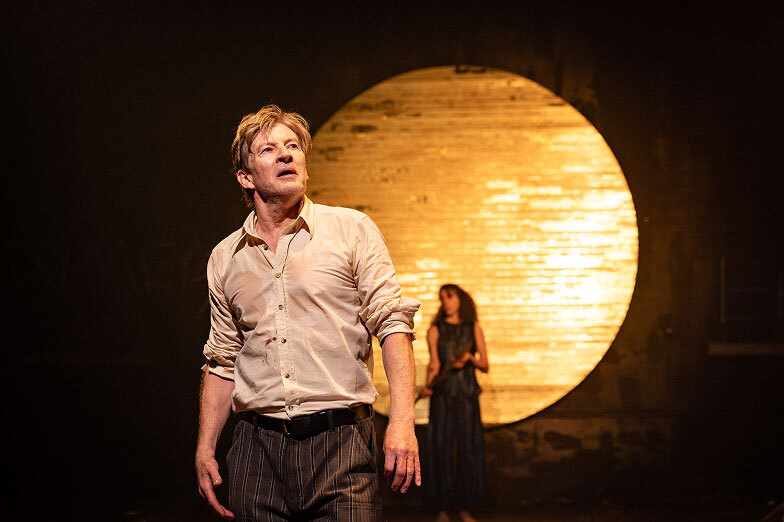
Now Brisbane gets its turn.
In 2027, Wenham brings the Sydney Theatre Company production to Queensland Theatre Company for its Queensland premiere, performing alongside acclaimed musician and composer Helen Svoboda under the direction of Damien Ryan, one of Australia’s most innovative theatre directors.
For Wenham, who now calls Brisbane home, it is an opportunity he has been waiting for.
“An Iliad is a little creative treasure for me,” he says. “I am thrilled to finally have the opportunity to perform
live in Brisbane to open QTC’s 2027 season.”
Written by Lisa Peterson and Denis O’Hare, An Iliad takes one of the foundational stories of Western literature and strips it back to its oldest form.
A storyteller. An audience. A story that must be told.
Peterson and O’Hare began creating the work in the aftermath of the 2003 invasion of Iraq, grappling with what theatre might have to say about a country at war. They found their way back to Homer and to the origins of The Iliad itself: not as a book to be studied, but as a story spoken aloud and passed from storyteller to storyteller for generations.
At its centre is the Poet: part ancient bard, part modern war correspondent, part eternal wanderer, condemned to keep telling the story of the Trojan War until humanity finally overcomes its addiction to violence.
The problem is that we haven’t.
“The Poet is someone who has seen the effects of war from myriad perspectives,” Wenham says.
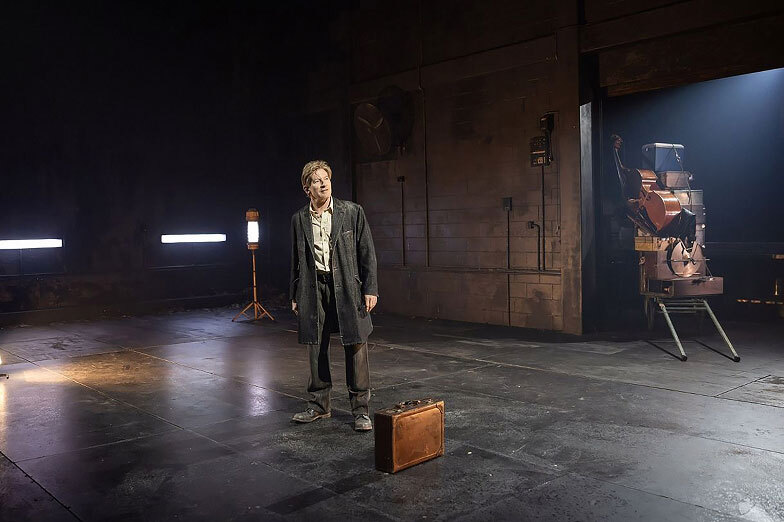
“He has seen war from the viewpoint of leaders and fighters from both sides. He has seen the effects of war on the families of fighters; he has seen the flow-on effects to society as a whole.”
Across millennia, he has watched countries, weapons and battlefields change while the human cost remains grimly familiar.
For Ryan, that is where the ancient epic becomes startlingly contemporary.
Homer begins The Iliad not with a battle, Ryan observes, but with an emotion: rage.
“The struggle of the Poet in this play is not simply one of recall, but of meaning,” Ryan says. “We do not lack information; we lack understanding. We do not need to remember – we need to learn.”
That tension courses through the production. The Poet is exhausted by the story and desperate to stop telling it, yet compelled to begin again.
And for all the enormity of its subject, An Iliad is not a solemn 100-minute history lesson.
The Poet is wry, funny, unpredictable and deeply human. The play moves between the ancient and the immediate, the epic and the conversational, finding recognisable human beings inside a story of warriors, gods and war.
The fact that this story that is nearly 3,000 years old and continues to resonate is extraordinary.
— David Wenham
“It demonstrates that irrespective of who we are, where we live, our similarities are greater than our differences.”
He is equally wary of reducing the play to a simple anti-war message.
“Humans are fascinating creatures, capable of inspiring and producing so much that is good in the world but equally capable of so much horror,” he says.
“There is a sliver of hope in An Iliad and that is what I hang on to.”
If its ideas are enormous, the theatricality is deliberately uncomplicated but highly imaginative.
There are no armies marching across the stage, no fleet of Greek ships, no sprawling cast of heroes and gods.
There is Wenham, Svoboda, an audience and the act of imagination.
For an actor whose four-decade career has stretched from Australian stages to SeaChange, The Lord of the Rings, 300 and productions around the world, that simplicity feels unexpectedly like coming full circle.
“My training as an actor more than four decades ago was in a large tin shed,” Wenham says.
“It was here that I learnt that a bare space and my imagination could conjure stories and bring them alive.
“With An Iliad, I am returning to my theatre roots.”
Simple, however, does not mean easy.
There is nowhere to hide.
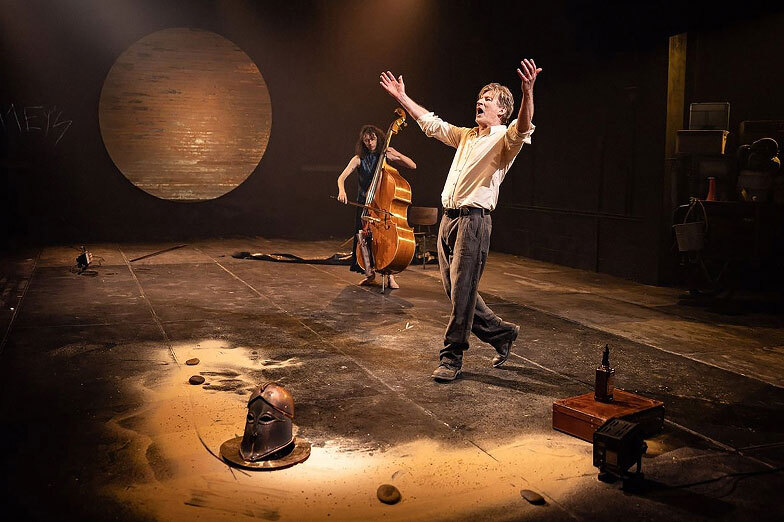
Wenham must hold the room for 100 minutes while navigating a monumental text, its shifts in character and tone and the considerable physical and vocal demands of the role.
But when the performance itself arrives, he tries not to contemplate the mountain ahead.
“I begin each performance not thinking about anything that lies ahead in the following 100 minutes,” he says.
I take a breath, enter the space, take in the audience and begin.
— David Wenham
An Iliad is performed in direct address, with Wenham responding to the particular energy in the room each night.
“Every night is slightly different due to the make-up and feel of the audience.”
It is theatre at its most exposed, and for Wenham, its most intoxicating.
“There is nothing like the feel of a live performance when all elements conspire to produce an experience that affects an audience in a truly memorable way,” he says.
3,000 years after someone first began telling the story of Troy, Wenham will walk onto a Brisbane stage and take his place in that extraordinary chain of storytellers.
He will look at the people waiting for him.
He will take a breath.
And he will begin again.