Pride & Prejudice, Heard Differently
How music makes Austen feel immediate, romantic and alive for contemporary audiences.
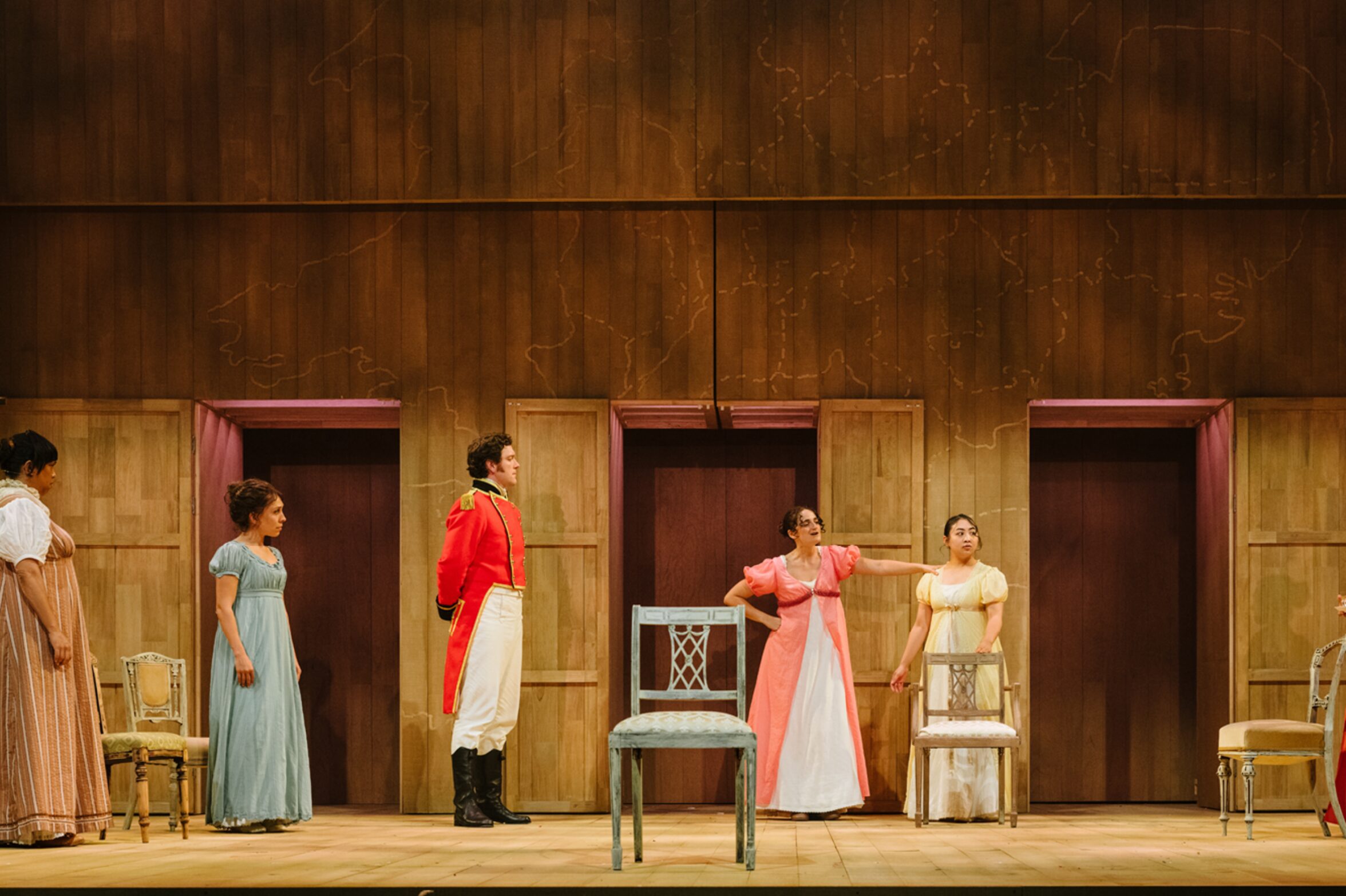
For Guy Webster, Queensland Theatre Company’s Pride & Prejudice begins with a simple truth.
“This is a love story and I love a good soppy love story.”
That might sound obvious for one of the most beloved romances ever written, but it is also the guiding principle behind the production’s music. Before audiences recognise a melody, notice an arrangement or feel the energy of a dance sequence, the sound world is working towards something much simpler: helping us fall in love with the story.
For Webster, the musical moments that linger are often the ones that lean fully into romance. The dreamlike encounter in the garden at Pemberley and the final meeting between Elizabeth Bennet and Mr Darcy both come to mind.
“The musical moments that really enjoy the romance of the story are often the most satisfying,” he says.

That focus on feeling sits at the heart of the production’s distinctive sound world. Contemporary songs appear throughout Pride & Prejudice, transformed to sit inside Austen’s world. Once, the idea of modern pop songs in a period story may have felt unexpected, especially for a novel loved across generations. But for Webster, the pleasure is obvious.
“After A Knight’s Tale and Bridgerton, all bets are off,” he says. “It is a lot of fun to have familiar melodies inhabit these stories.”
Still, the songs are not there simply to be recognised. In fact, audiences may not consciously identify many of them at all. That is part of the design.
Though you may never hear the words, each song is carefully chosen for its original lyrics and how they reflect the narrative journey of the moment.
It is one of the most revealing insights into Webster’s approach. The songs are chosen not because they are contemporary, but because they already contain the emotional shape of the story being told on stage: longing, doubt, hope, embarrassment, renewal.
The music becomes another way of carrying the romance.
To support that emotional connection, Webster pushed beyond a purely traditional period sound.
“I tried to push the string quartet a little further into a contemporary sound,” he says.
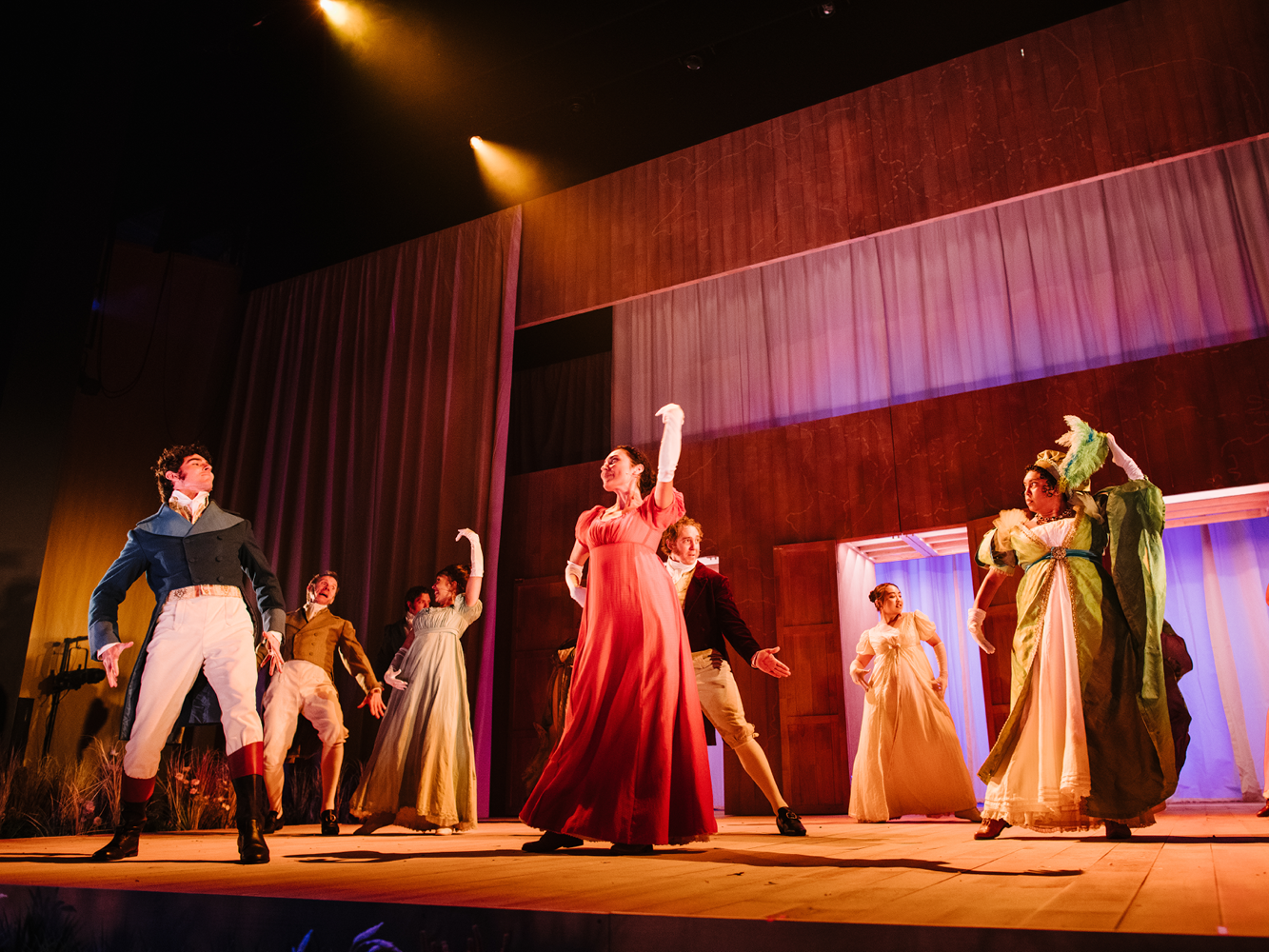
That meant bringing the warmth of strings into conversation with electronic drums, synthesisers, and the sounds of modern cinema and pop music. At times, the production leans fully into that energy.
“In some cases, we really turned up the energy and took it to the club,” Webster says. “Like a big night out with your friends.”
The result is a sound world that can move between intimacy and exhilaration, between the private emotions of a love story and the social thrill of a crowded room.
“It’s kind of like a mixtape of a young romance,” Webster says, “with all the twists and turns of doubt and renewal.”
It is a fitting metaphor for Pride & Prejudice. Long before Elizabeth and Darcy find their way to one another, they move through misunderstanding, pride, attraction, disappointment and hope. The emotional journey remains familiar, even if the social rules around it have changed.
That is why the music feels so immediate. It does not drag Austen into the present. Instead, it lets audiences hear how present the romance already is.
For contemporary audiences, especially younger audiences, that familiar musical language can offer an immediate emotional connection to a story that has endured for more than two centuries. Not because the music makes Austen relevant, but because it helps audiences recognise themselves within the romance.
Beneath the strings, the hidden lyrics, the familiar melodies and the club-like bursts of energy, the music is asking audiences to do what Pride & Prejudice has always asked of them: to surrender to the possibility of love.
As Webster puts it:
“In the end, we all want to fall in love. Right?”