A World of Its Own
A shared cabin, a shifting landscape and a cast of strangers. Set and Costume Designer, Isabel Hudson reveals how the design of Small Mouth Sounds creates a world where isolation and connection exist side by side.
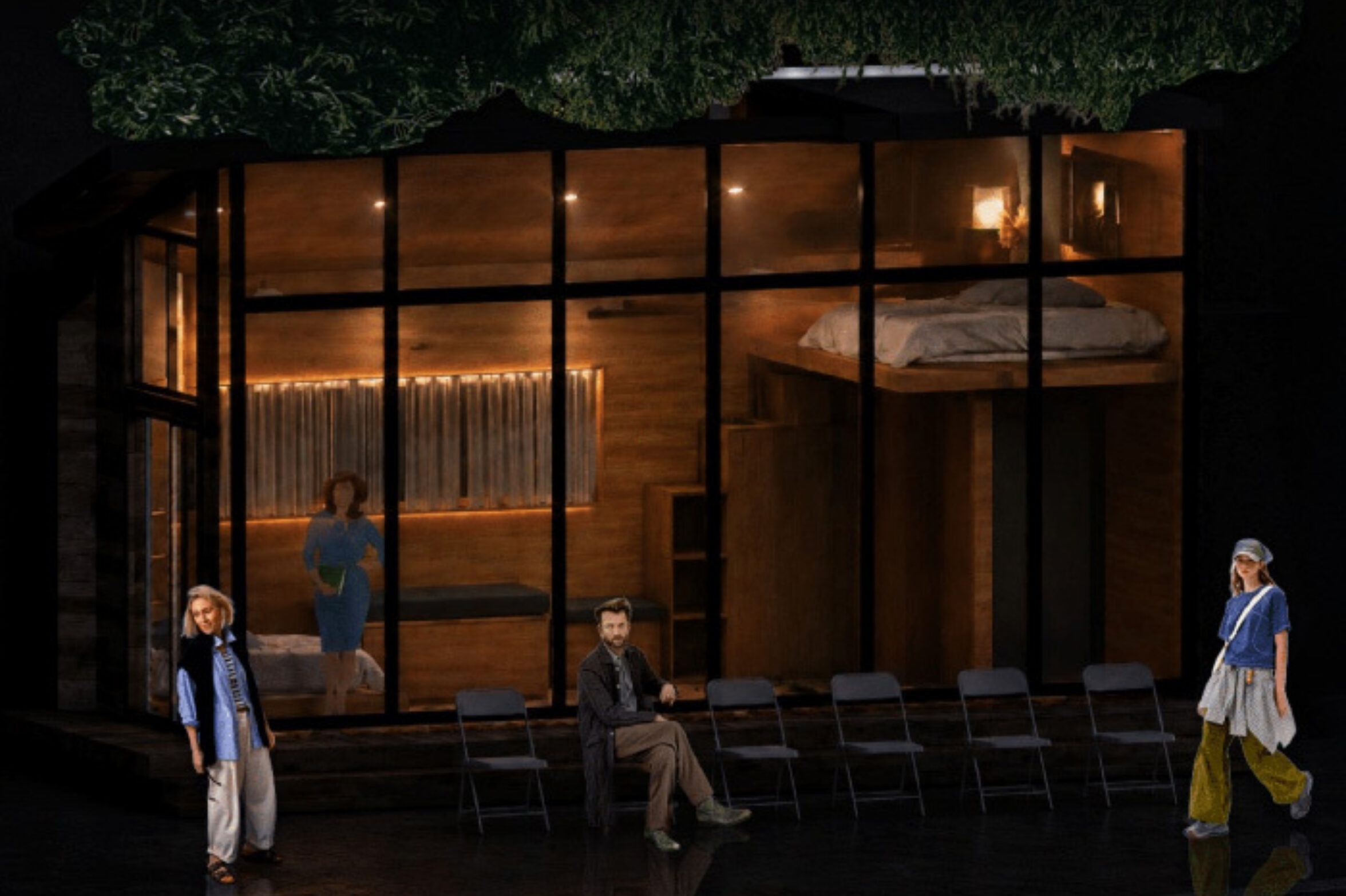
The design for Small Mouth Sounds asks us to recognise ourselves in these strangers. The form presents separate experiences overlapping within one shared space, each searching for moments of connection, recognition and peace.
The design began with a process of stripping the space back, resisting the impulse to illustrate every location and instead creating a theatrical framework for sound, light and form to fill. The physical elements offer fragments of a place rather than a complete picture, leaving space for the audience’s imagination to build the world beyond what we can see.
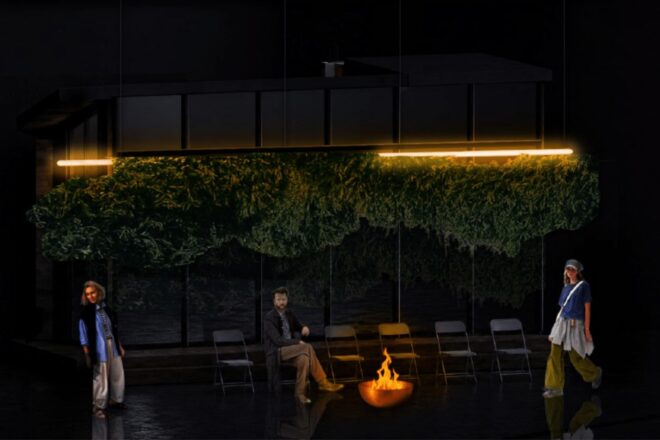
Reflection extends this idea into the auditorium. Mirrored surfaces hold fragments of the performers, landscape and audience together. As we watch these strangers attempt to understand one another, we encounter our own reflection, or someone sitting beside us. We become part of the retreat, a quiet reminder that, even in our most isolated moments, we are not alone.
The landscape is conceived less as a literal place and more as an installation, an impression of the natural world. A forest canopy hangs above the stage as a constant presence: something larger than any individual, beneath which these strangers gather, retreat and gradually begin to see one another.
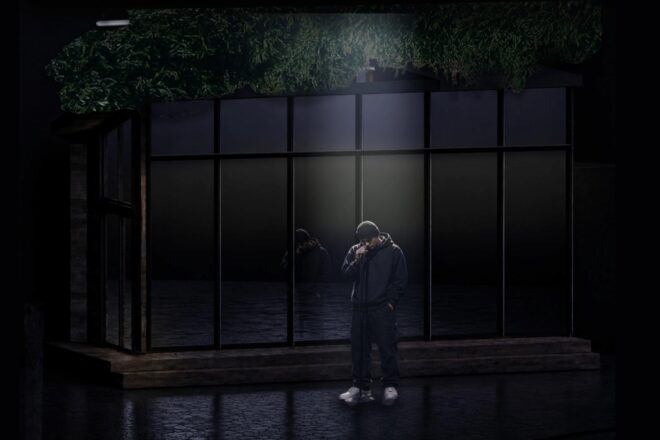
Rather than representing the three separate cabins described in the text, we condensed them into one shared cabin. Bedding, lamps and belongings transform the warm plywood interior, allowing separate rooms and lives to overlay within the same architecture. One person leaves and another arrives; traces of one experience remain within the next. Though the characters may feel profoundly alone, they are continually (if unknowingly) connected.
The canopy, mirror and dynamic lighting installation create a fluid, metaphorical landscape. Sound becomes almost architectural: rain, water, birds and the unseen forest extend beyond the edges of the stage, and this was an exciting idea to design for.
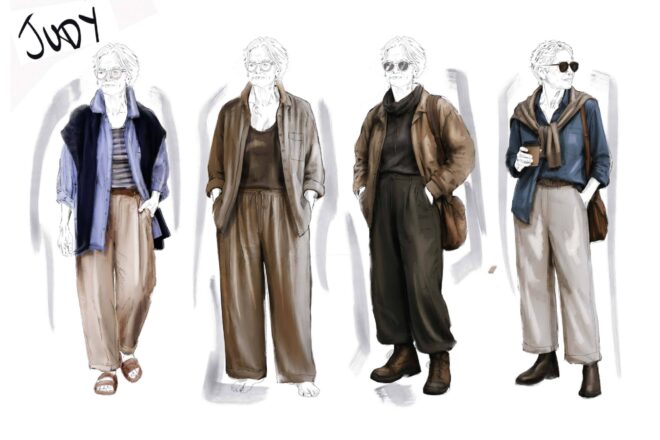
The costume begins with individuality, each character arriving in their own kind of armour. As silence takes hold, these layers soften, revealing something more vulnerable beneath while we then move into something more harmonious for the final image of the show.
In a play where language has been limited, the design follows a similar principle: say less, and allow us to engage and imagine and remember we aren’t alone.
Isabel Hudson