The Language of Attraction
How movement and intimacy shape the relationships of Pride & Prejudice.
There is a moment in every great romance that arrives before a declaration, before a touch, sometimes even before a glance. It lives in the pause before something happens — the hesitation, the anticipation, the possibility, a spark.
In Queensland Theatre Company’s Pride & Prejudice, that space matters.
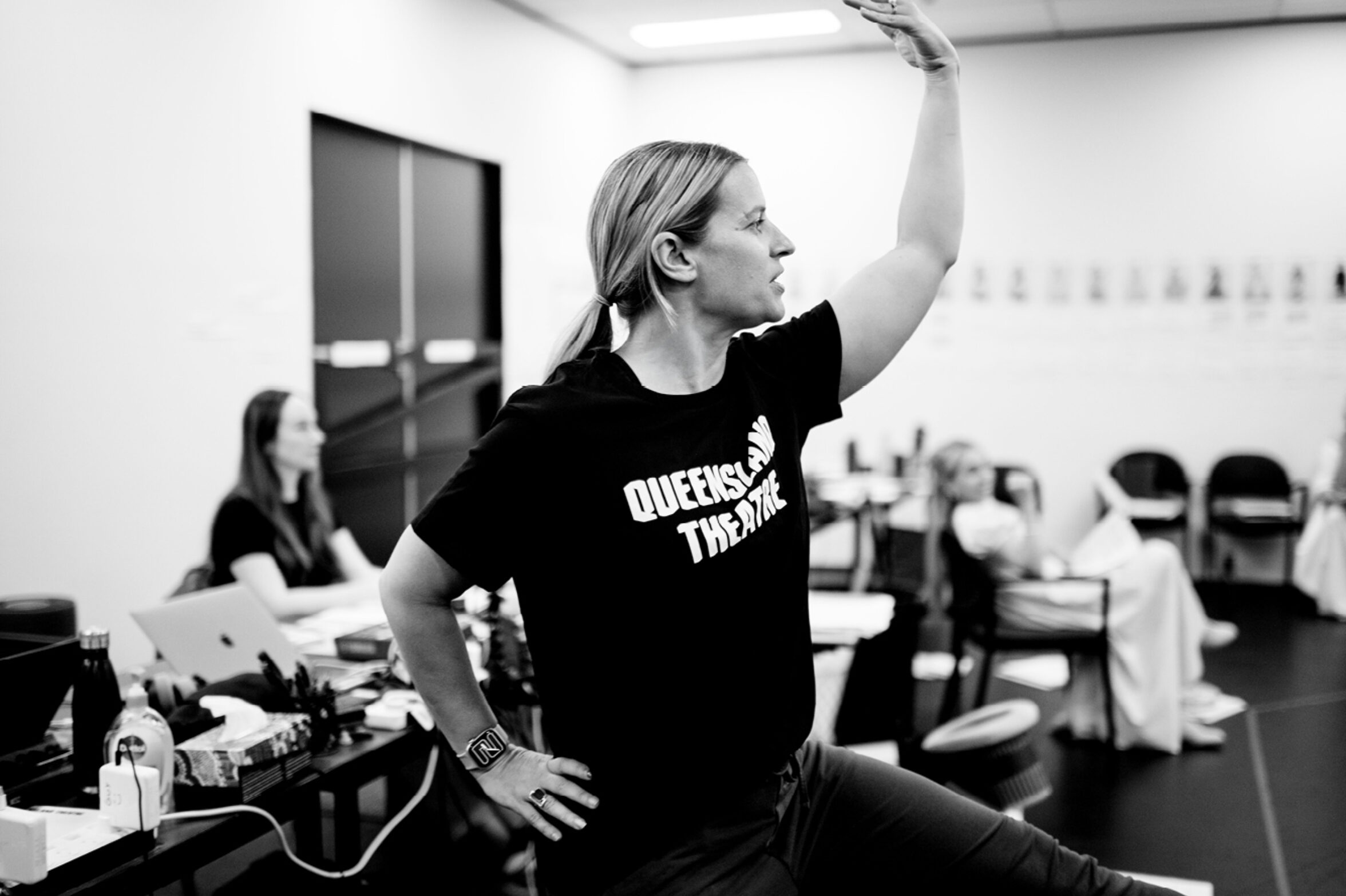
For Nerida Matthaei, Movement Director, Choreographer and Intimacy Coordinator, some of the production’s most important storytelling happens not through words, but in the charged space around them.
“There is much to be said around crafting the space between a word, a touch and a gesture,” she says. “The negative space can be as interesting and powerful as the positive space.”
It is a fitting idea for a story built on misunderstandings, assumptions, longing and restraint. Long before Elizabeth Bennet and Mr Darcy are able to articulate what they feel, audiences are already reading the shifts between them. A pause holds a little longer. A gesture carries unexpected weight. A character moves closer, then thinks better of it.
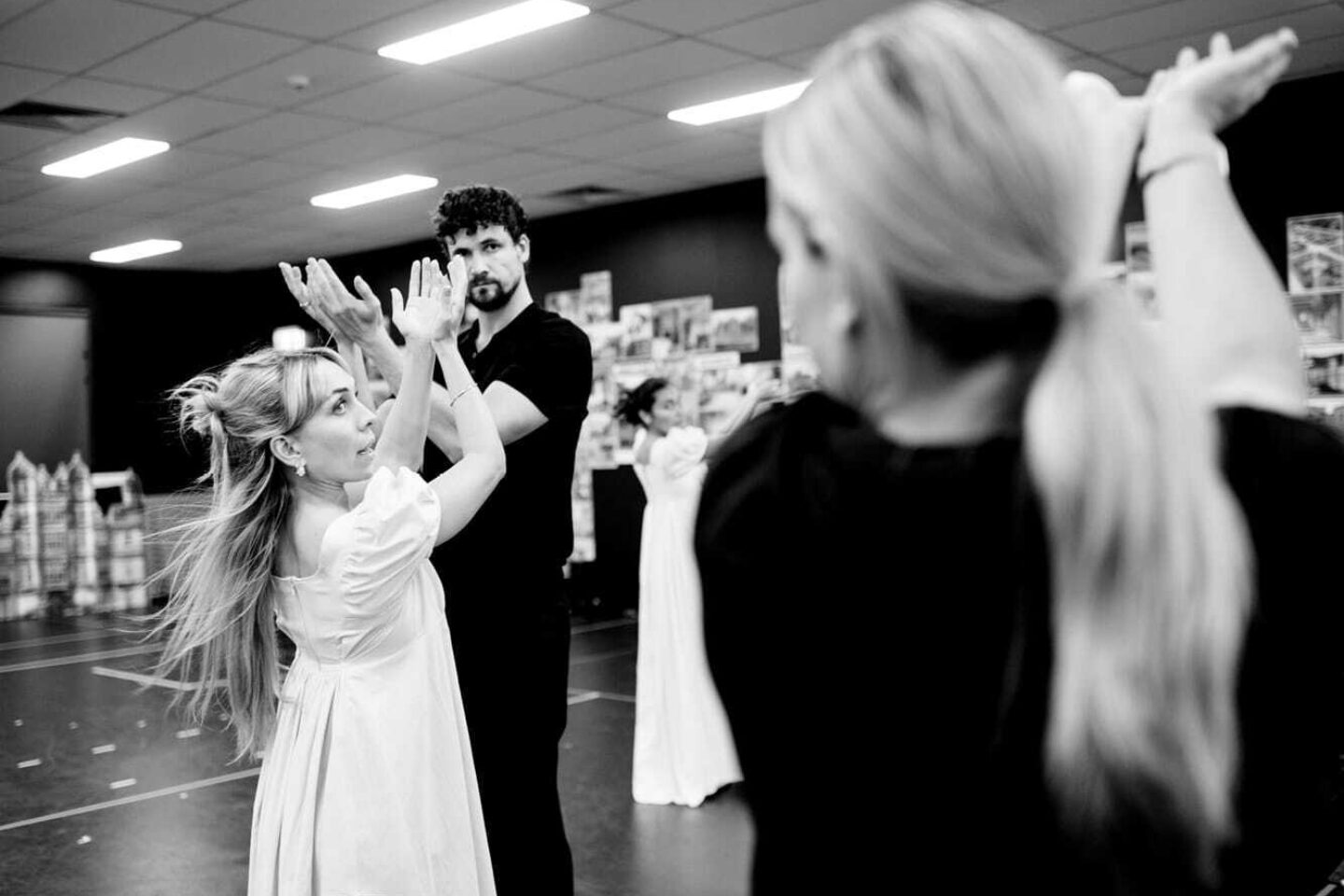
For Matthaei, character is revealed physically long before it is spoken.
“There are characters who are restrained, held, immobile and precise,” she says, “and others that are free of constraint, effervescent and fluid in their movements.”
Those differences are not incidental. They are part of how the production makes each relationship legible.
“These are not instinctive choices,” Matthaei says, “but purposely crafted visceral layers in each character’s embodiment.”
The contrast is especially clear in Darcy and Lydia Bennet. Darcy’s physical world is steadfast, contained and precise. Lydia’s is fast-moving, powerful and difficult to hold in place.
One character seems to brace against the room. The other rushes through it.
Even if audiences cannot name those choices, they feel the difference. That physical contrast helps them understand the social world of the play: who is controlled, who is watched, who pushes against restraint, and who reveals themselves before they mean to.
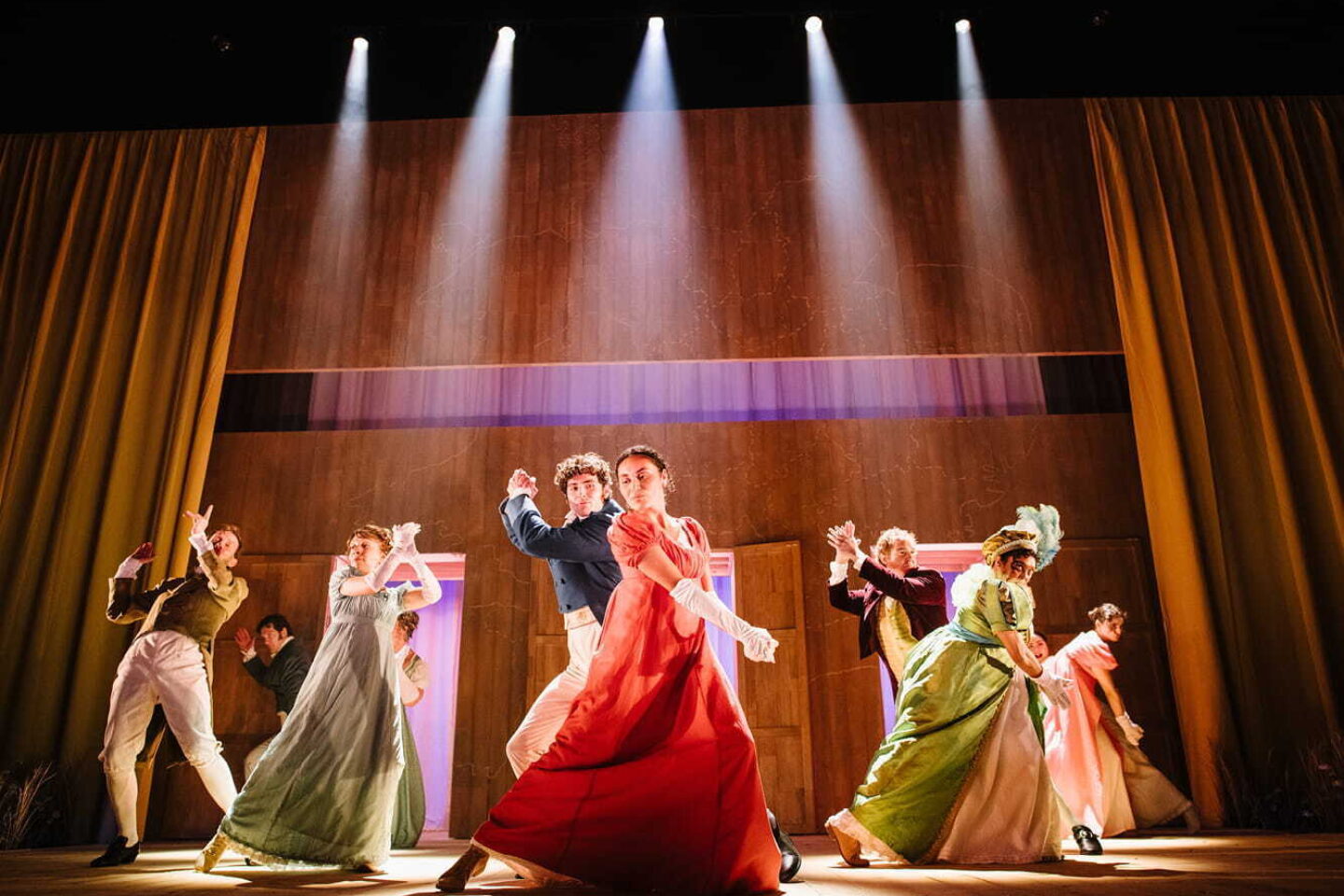
It is also part of how the production honours Austen’s world while making it feel alive for contemporary audiences.
When Matthaei began conceiving the physical aesthetic for the production, it was important to her to build from the world of the period.
“I wanted to use the formations and techniques of the Regency era to scaffold the many dance pieces in this work,” she says, “whilst also injecting contemporary flair and nuance.”
The clearest expression of that fusion arrives in the opening Netherfield Ball sequence. The formality of the Regency world remains, but beneath it is something vividly recognisable: excitement, social pressure, awkwardness, attraction, the strange thrill of being seen and assessed in a room full of people.
“With a work that has been so deeply loved by audiences over centuries,” Matthaei says, “it’s important to hold onto its essence, and yet light it on fire with an energy that a modern audience will identify with and love.”
That balance can be felt not only in the larger sequences, but in details many audience members may not consciously notice.
Towards the end of the production, a wedding brings several of the story’s relationships together. For Matthaei, the choreography offers a glimpse into the private lives and loves of the characters.
“There are gestures we have seen before that are significant for these characters and re-seen with new weight,” she says.
Some gestures return changed. Others reveal something audiences have not seen before, and in some instances speak to their future.
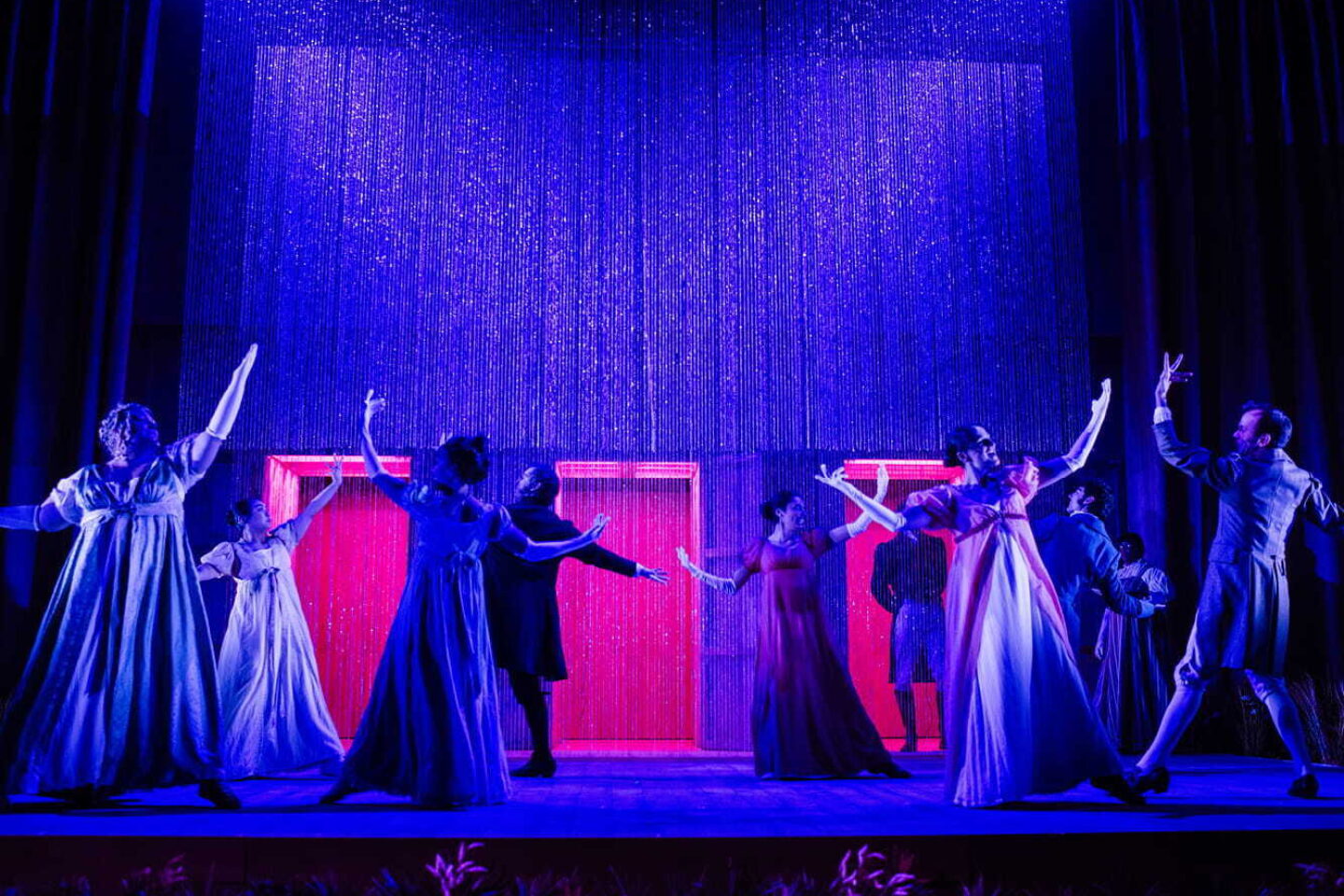
“It is an insight into the relationship layers we do not get to see,” Matthaei says, “an insight into their version of love behind closed doors.”
Rather than simply celebrating a happy ending, the sequence quietly suggests a future. It lets the audience imagine each couple’s version of intimacy beyond the final scene.
That attention to what is private, withheld or almost expressed helps explain why Pride & Prejudice continues to feel so alive in the theatre.
Matthaei is careful not to make too neat a comparison between Regency courtship and romance now.
“Perhaps yes and no,” she says.
Romantic gestures have shifted over time. The rules of the game have been re-coded, from supervised, class-conscious rituals where physical touch was taboo to a contemporary world shaped by different expectations around intimacy, consent and individual choice.
But beneath those changing rituals, Matthaei sees something remarkably familiar.
“Has our need for emotional vulnerability changed?” she asks. “Or the dream of being swept off our feet by love and lust changed?”
Her answer is immediate.
“Definitely not.”
Perhaps that is why audiences continue to lean forward when Elizabeth and Darcy enter the same space, even when they already know exactly how the story ends.
In Pride & Prejudice, the love story does not live only in what is said. It lives in the breath before the words, the gesture not quite completed, the space between one person and another.
It lives, still, between a word, a touch and a gesture.